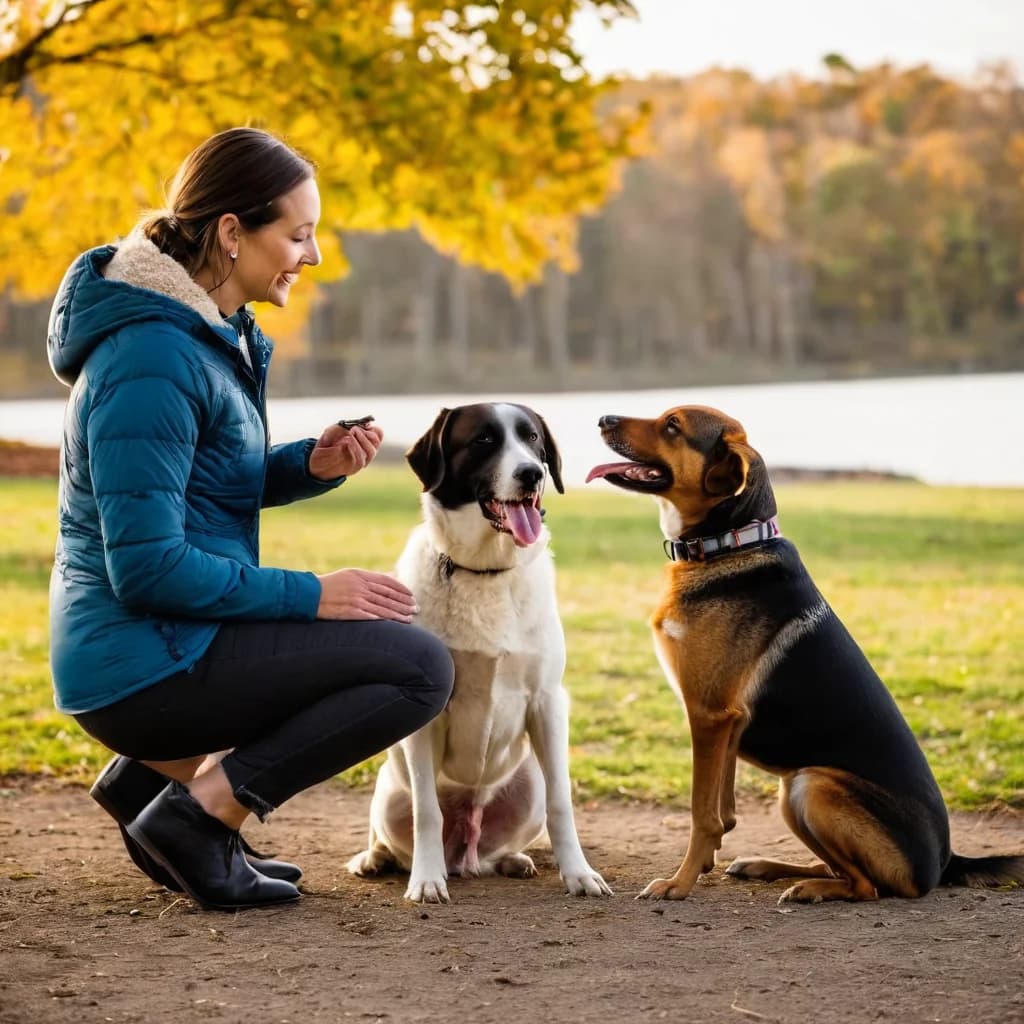

When a dog barks, pulls or lunges at other dogs, it's called "reactivity." The cause is most often fear or poor socialization. It improves with a vet behavior specialist and consistent training.
Types of Reactivity
- Fear reactivity: First tries to flee, then attacks defensively
- Excitement reactivity: Wants to play but has no control
- Protective reactivity: Guarding the owner or a resource
- True aggression: Intends to attack (rare)
Causes
- Poor socialization (as a puppy, 3-16 weeks)
- A bad past experience (an attack, a fright)
- Leash stress (the owner's tension passing to the dog)
- A health problem (pain leads to defensiveness)
- Genetics (some breeds are predisposed)
Don't List
- Yelling or punishing (makes it worse)
- Tightening the leash (neck pain and defensiveness)
- Forcing the dog close to the other dog
- Owner stress (the dog picks it up)
- Old punishment methods (electric collars)
A Structured Plan
1. Distance
- The distance from the other dog where your dog is "comfortable" (10 m, 20 m)
- Calm at that distance = reward
- Gradually move closer
2. Counterconditioning
- Another dog appears → food or a reward
- The dog's world changes: "Dog = good thing"
- Consistent repetition (for weeks)
3. Working Below Threshold
- Step in before your dog starts barking
- Change direction, redirect attention
- Reward smartly
Vet Behavior Specialist
For serious reactivity:
- A health assessment (pain, hormones)
- Anti-anxiety medication (if needed)
- A behavior modification plan
- One-on-one training
Puppies with Poor Socialization
If the 3-16 week socialization window was missed, it's harder but doable:
- Controlled play (with a known healthy, gentle dog)
- Start with distance
- Patient and long-term
Owner Attitude
- Stay calm (tension passes to the dog)
- Keep the leash loose
- Use a normal voice when another dog appears
- Watch for changes in your dog's gaze
Apartments and Parks
- Avoid the park at busy times (go very early in the morning or very late in the evening)
- Elevator control (an enclosed space is stressful)
- Meeting another dog at the door or in the hallway → be careful
Emergency: An Attack
If your dog is biting another dog, separate them:
- No yelling (it gets worse)
- Pour water (it works)
- Throw a blanket or coat (blocks their view)
- Never put your hand between two dogs (you'll get bitten)
FAQ
How long does training take? Months; there's no quick fix.
Is an off-leash park safe? NEVER for a reactive dog; keep the leash on until things improve.
Is anti-anxiety medication needed? That's the vet's call; it's supportive if traditional training isn't enough.
Dog behavior and training are in the DoldurKabı pet health tracking system.