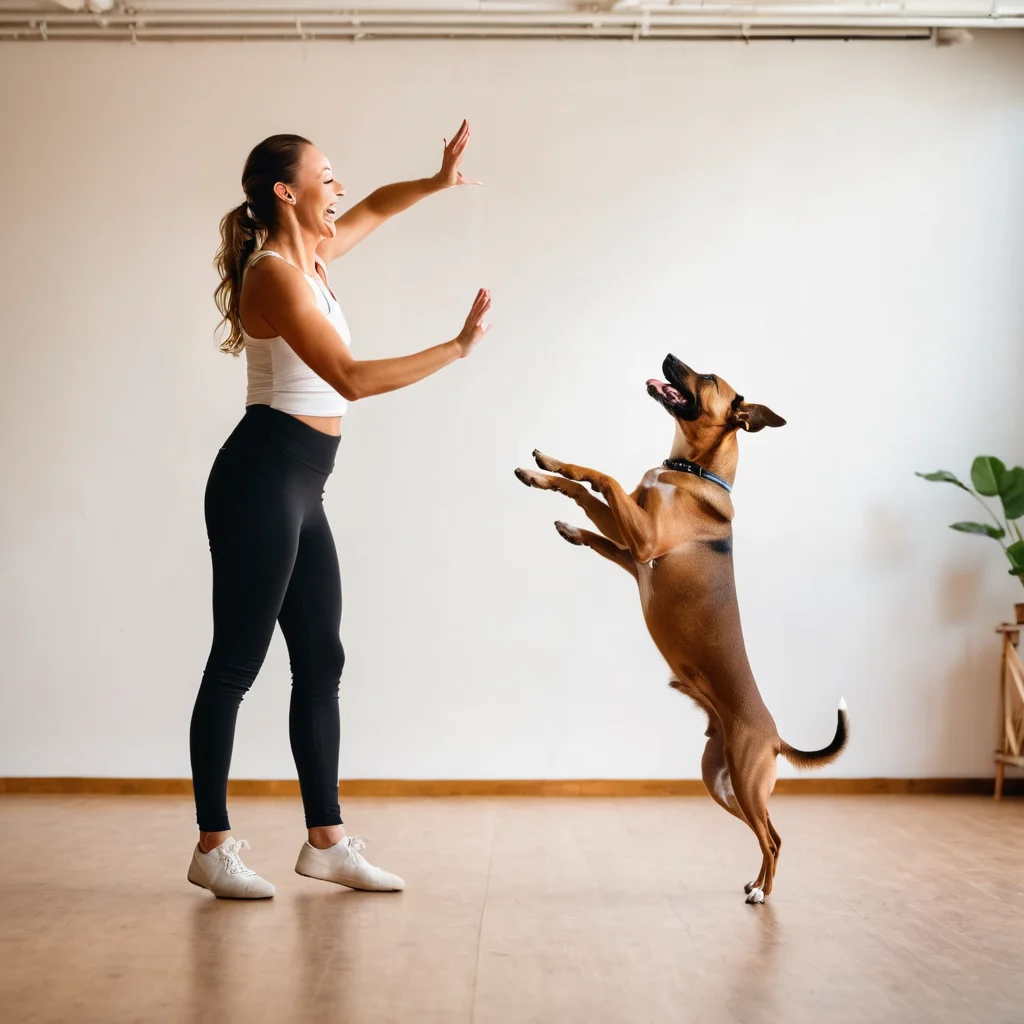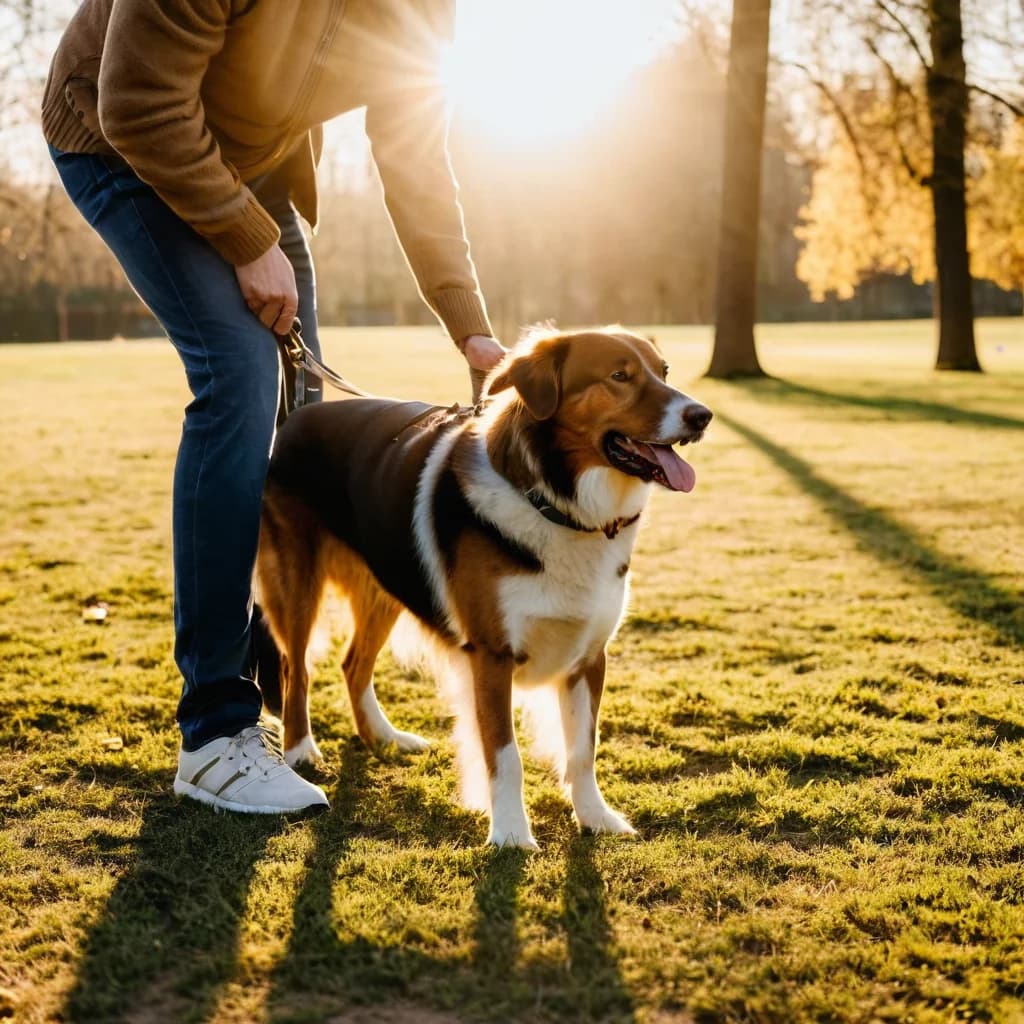

The "Stay" command is used after "Sit" or "Down": the dog holds the position. It is a foundation for discipline and trust. Time and distance are increased gradually.
Prerequisite
Your dog should reliably do "Sit" or "Down".
Step 1: Time (1-2 Seconds)
- Say "Stay" while your dog is sitting
- Wait 1 second
- Right away, reward + release word ("OK", "Free")
- 5 repetitions / session
Step 2: Increase the Time
- 2 sec, 5 sec, 10 sec, 30 sec, gradually
- 3-5 successes at each level → move to the next
- If your dog breaks position → "No" + sit again
Step 3: Distance
- First, stand in place
- Then take 1 step back
- 3 steps, 5 steps
- Go back to give the reward (don't wait for your dog to come to you)
Step 4: Time and Distance Together
- 10 sec at 5 steps away
- 30 sec at 10 steps
- Out of sight (another room)
Step 5: Distractions
- Throw a ball (your dog should wait)
- Have another person walk by
- The smell of cooking
- A park setting
Hand Signal
An open palm (a stop sign) + the verbal command. Your dog understands both the visual and the sound.
Common Mistakes
- Increasing the time too fast (your dog feels like it is failing)
- Punishing your dog for coming to you (the word "stay" gets a bad association)
- Saying "Stay" and walking off (your dog thinks it means "Come")
- Changing position (not sit → stay → sit; "stay" means holding the position)
Everyday Use
- "Sit, stay" when the doorbell rings
- "Stay" while you prepare food
- "Stay" + release before free play at the park
- Keep your dog calm when guests arrive
FAQ
How long does it take to learn? The basics in 2-3 weeks, perfecting it in 2-3 months.
My dog keeps getting up. Shorten the time, reinforce success, then increase slowly.
Stay on their bed? On the bed, use "Down, stay": control without your dog leaving the room.
Pet training guides are in the DoldurKabı pet health system.