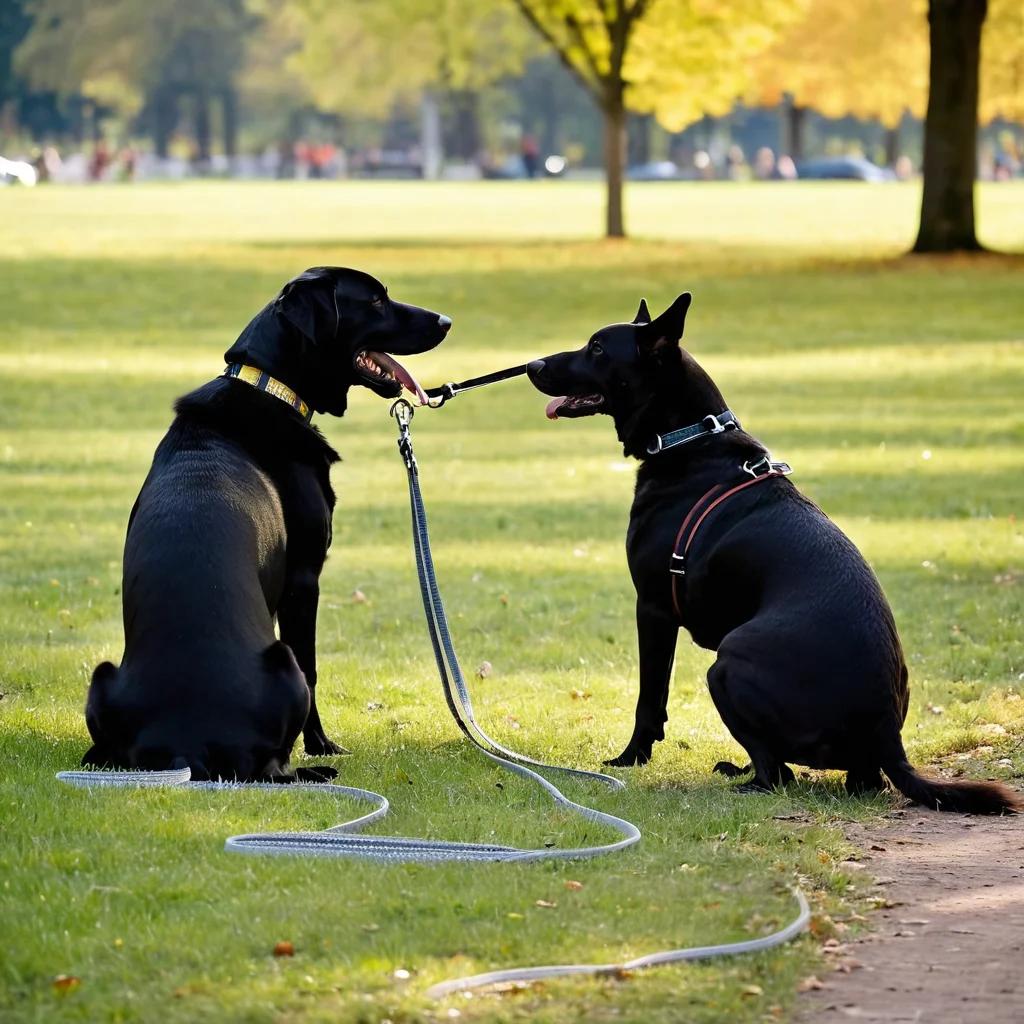

Dog-on-dog aggression is behavior that starts with barking, lunging or pulling back when a dog sees another dog, especially on leashed walks, and can go as far as biting. "Leash reactivity" is a common problem for today's dog owners. Without training, it can go on for years in an adult dog. Improvement is possible with BAT (Behavior Adjustment Training), LAT (Look at That) and a gradual desensitization protocol. In this article, we walk through a detailed guide to working on it.
1. What Is Leash Reactivity?
- Your dog sees another dog while on leash → an outburst (barking, lunging).
- It's usually fear underneath: aggression because the dog can't get away.
- Off leash (at a dog park), it's sometimes better.
- A mix of frustration, a physical barrier and missing social skills.
2. Causes
- Too little socialization as a puppy: Not enough contact with other dogs between 3 and 14 weeks.
- A traumatic experience: A past attack or bad experience.
- Fear: The other dog is seen as a "threat."
- Leash frustration: "I want to get closer, but I can't."
- Owner tension: When the leash tightens, the dog goes on alert.
3. First Step: Trigger Distance
- The distance at which your dog sees the other dog but doesn't react → your training starting point.
- This could be 5 m, 10 m or 30 m, depending on the dog.
- "Below threshold" distance = learning is possible.
- "Above threshold" = panic, and learning is impossible.
4. The LAT (Look at That) Technique
A simple, effective technique developed by Pat Miller:
- The trigger (the other dog) is at a below-threshold distance.
- The moment your dog sees it, say "yes!" → treat.
- Your dog builds the association "seeing another dog = a treat is coming."
- The distance slowly gets shorter.
- Your dog actually starts to see the other dog as a "signal that a treat is coming."
- Full success can take 2-3 months.
5. BAT (Behavior Adjustment Training)
A technique developed by Grisha Stewart:
- Give your dog a choice: move toward the trigger or away from it.
- Natural behavior stays in play: approach, sniff, move away.
- The owner uses a loose leash and walks calmly.
- The dog's choice → increase the distance or move closer.
- The owner doesn't give treats; the natural behavior is its own reward.
- The process takes months, but the results last.
6. The U-Turn Technique
- When you see another dog, quietly make a U-turn with your dog.
- Keep your dog from moving toward the trigger.
- Head back to a safe distance with a treat.
- Use it as an emergency exit strategy.
7. The Right Equipment
- Front-clip harness: Reduces pulling and improves control.
- NO neck collar: Pressure on the neck during a reactive moment triggers aggression.
- A 1.5-2 m leash: A retractable leash means losing control.
- Treat pouch: High-value treats (chicken, cheese).
- Muzzle (if needed): If your dog has tried to bite → for safety.
8. Walking Strategy
- Choose quiet hours (early morning, late at night).
- Quiet streets: avoid parks crowded with dogs.
- Places with a wide view (to avoid sudden encounters with dogs).
- When a dog comes toward you, either make a U-turn or step around a corner.
- Avoid dog parks for now, while training is underway.
9. Dog-on-Dog Aggression at Home
Fights between dogs in the same home are a separate and serious problem:
- Resource guarding (food, bed, the owner).
- Hierarchy issues.
- Aging (an older dog loses dominance).
- Bringing a new dog home.
- Treatment: separate beds, separate food, separate attention, and a behaviorist.
- In severe cases, separate homes are recommended.
10. Professional Help
- A consultation with a veterinary behaviorist for severe cases.
- A certified force-free dog trainer for training sessions.
- Group training classes for socialization and controlled exposure.
- SSRI medication (if needed).
- The process usually takes 6-12 months.
Dog-on-dog aggression is common and treatable, but it calls for a BAT, LAT and reward-based desensitization protocol. Punishment and leash jerks make the problem worse. Distance, a gradual approach and consistency over years lead to success. In the DoldurKabı app, you can find vet clinics with behavior experience on a map.