


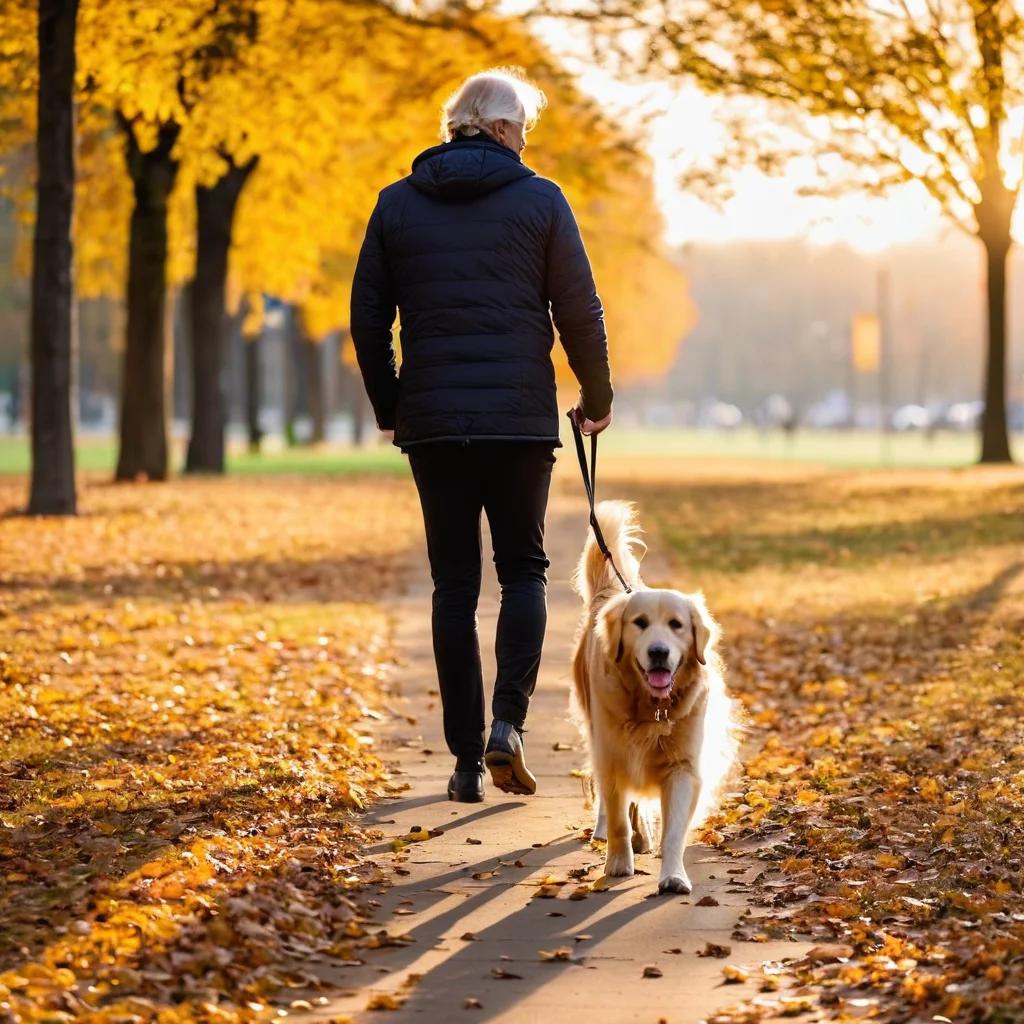

If your dog pulls on the leash, there's a simple reason: pulling works. You walk along behind it → your dog gets where it wants to go. If this behavior sets in before age 1, the dog will stubbornly keep it up until 5-6 years old, and shoulder, elbow and neck problems can follow. The solution isn't physical force (a choke collar, a prong collar), it's reversing the mechanics of the behavior. In this article we explain the science behind loose-leash walking, the "stop and go" technique, the U-turn protocol and a 30-day training plan.
1. Why Do Dogs Pull on the Leash?
People assume the dog is "dominant and wants to be the leader". That's wrong. Dogs act on simple reinforcement learning:
- The dog pulls forward.
- The owner moves forward with the dog.
- The dog reaches what it wants (a tree, a smell, another dog).
- The brain: "pulling = reward". The behavior gets reinforced.
Instinctively, dogs walk 3-4 times faster than people; we can't walk at their pace without slowing them down. To solve the pulling problem, the owner has to take control of the walk.
2. The Stop-and-Go Technique (Stop, Wait, Continue)
The most effective, evidence-based core technique:
- Your dog pulls on the leash: stop immediately. Don't take another step.
- Your dog turns back to look at you or comes into a loose position.
- At that moment, give a "good job" + reward (food or a small treat from your pocket).
- Say "let's go" in a soft voice and keep moving.
- Pulls again → stop again. Reward again once the leash goes loose.
This simple but consistent routine teaches your dog: "if you pull, we don't move; if you ease up, we move". You'll usually see a clear change in 10-14 days.
3. The U-Turn Technique
The second technique, combined with stop-and-go:
- Your dog suddenly starts pulling toward something.
- You quietly turn around and walk the other way.
- Your dog has to come with you.
- When your dog comes up beside you, "good job" + reward.
- After 5-10 meters, you can turn again and continue in the original direction if you like.
The U-turn tells your dog: "the owner decides the direction". The old trigger (a smell, another dog) loses its importance.
4. Treat Pocket Position
Where the treats are matters in leash walking. The right pocket position:
- Treat pocket: On the OPPOSITE side from your leash hand (if your dog walks on your left, the front right pocket).
- Show the treat beside your dog's head: The natural "heel" (walking side by side) position.
- High-value rewards: Chicken pieces, cheese, meaty treat sticks. Dry biscuits aren't enough.
- Deliver fast: Your dog should get the treat within 1-2 seconds of being in the right position.
5. Choosing the Right Leash and Harness
Which equipment helps control pulling?
- Front-clip harness (anti-pull harness): The attachment is at the front, in the middle of the chest. When your dog pulls, it gets turned to the side, which makes pulling pointless. Brands: Ruffwear Front Range, PetSafe Easy Walk, Halti Front.
- Back-clip harness: The attachment is on the back. It doesn't really reduce pulling, but there's no pressure on the neck. This is the classic harness.
- Neck collar (classic): Doesn't control pulling. There's a risk of choking + pressure on the spine.
- Choke chain: Unethical and causes physical harm. Don't use it.
- Prong collar: Not banned in Türkiye, but behaviorists clearly reject it. It can trigger fear and aggression.
6. Leash Length
A 1.5-2 meter leash is ideal for most situations. A leash that's too short (60 cm) keeps your dog under constant pressure → the walk turns into a struggle. A retractable leash creates a risk of losing control + injury from sudden locking. Don't use one during training.
7. 5 Minutes of Energy Release Before the Walk
A dog just out of the apartment is full of stored-up energy + excitement and starts pulling right away. To prevent this:
- 30 seconds of repeated sit-and-stand in the apartment hallway.
- 1-2 minutes of ball chasing or brisk walking outside the building.
- Then the leash walk in training mode.
This little "warm-up" cuts pulling by 30-50%, since your dog has already burned off the stored energy.
8. 30-Day Training Plan
- Week 1: Go out only with a front-clip harness. Use the stop-and-go technique every time your dog pulls. Do a 15-minute training walk every day, separate from the regular walk.
- Week 2: Add U-turns. Your dog can't predict them → it stays alert. Training walk: 20 minutes.
- Week 3: On a quiet street, practice the "with me" command (walking side by side). Reward when your dog stays beside you for 5-10 steps.
- Week 4: Train on a busy, crowded street. Repeat stop-and-go around triggers (another dog, a cat).
By the end of 30 days, 70-80% of dogs learn loose-leash walking. Genetically very active breeds (Husky, Belgian Shepherd) may take up to 60 days.
9. Common Mistakes
- Inconsistency: Sometimes you let your dog pull, sometimes you don't. Your dog gets confused, and the behavior doesn't stick.
- Yelling: It only gets your dog more excited.
- Yanking back + jerking the leash: Neck injury, panic. Stop-and-go is enough.
- Late rewards: If more than 2 seconds pass between behavior and reward, your dog can't make the connection.
- Inconsistency in the family: Mom is consistent, Dad lets the pulling slide → the behavior never takes hold.
10. When Should a Veterinary Behaviorist Step In?
Professional support is needed in these situations:
- No change despite 30 days of consistent training.
- Your dog shows aggression along with pulling (lunging, attempts to bite).
- An older dog suddenly starts pulling (there may be a medical cause, such as joint pain or muscle weakness).
- Your puppy is 6+ months old and the classic methods aren't working.
Leash pulling can look like a stubborn habit, but the mechanics are simple. Stop-and-go + U-turns + the right harness + consistency bring a lasting solution in 30 days. Walking your dog becomes an enjoyable, healthy, social activity for both of you.









