


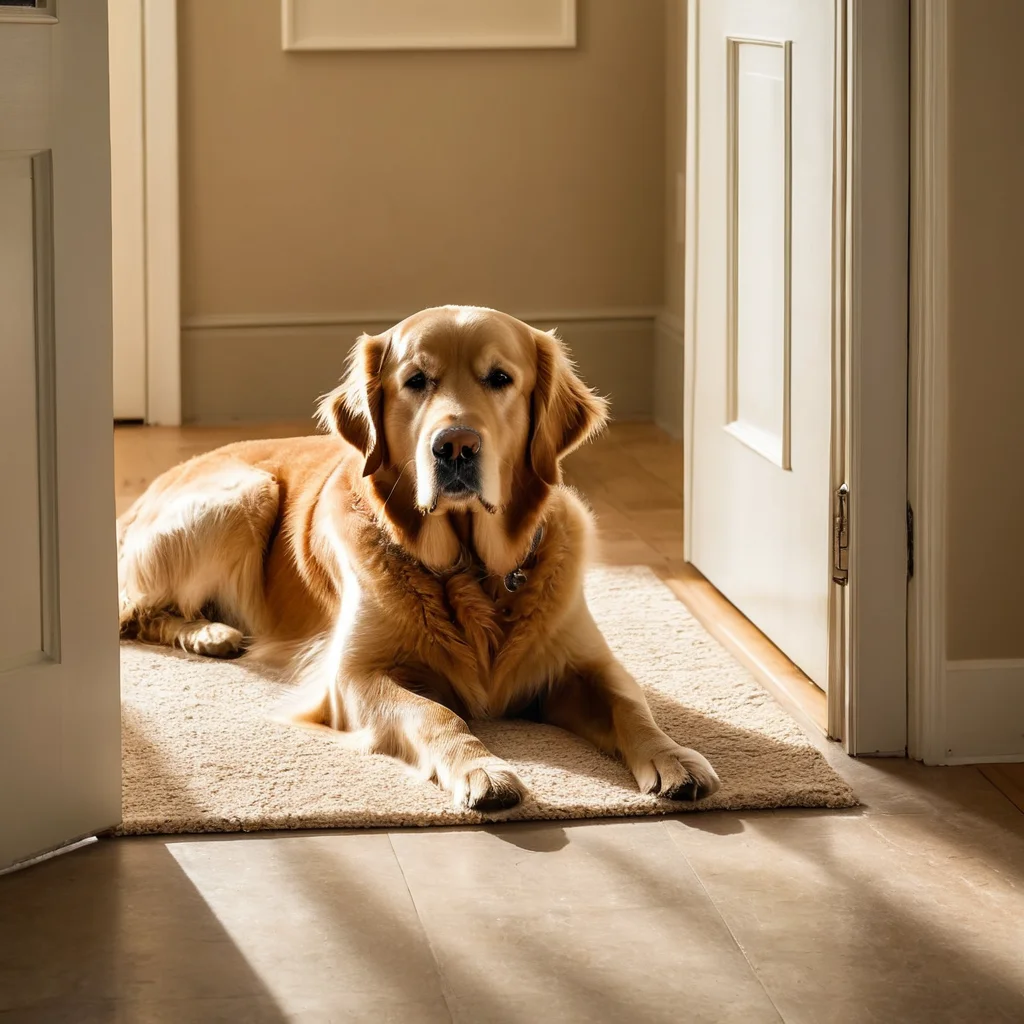

You come home to find tufts pulled out of the rug, the door frame scratched up, and your neighbor complaining about the barking. If that scene sounds familiar, this isn't a spoiled dog. These are signs of separation anxiety. Anxiety isn't a character flaw. It's a clinical behavior condition that can develop in a dog strongly bonded to its owner. The good news: with the right approach, about 80% of cases improve noticeably, and some clear up completely. The bad news: there's no quick "fix." This takes a structured plan of 3 to 8 weeks.
This guide covers the real causes of separation anxiety, its 10 signs, a step-by-step plan you can follow at home, and the most common mistakes owners make. Severe cases need support from a vet and a behavior specialist. This article alone won't solve serious cases.
1. Anxiety or Just Spoiled?
Behavior specialists broadly agree that true separation anxiety affects roughly 14-17% of dogs and reflects clinical-level stress. The telltale feature: the signs always appear when the owner is away, and the dog is calm when the owner is home. With a spoiled dog (linked to sex, a lack of boundaries, or too little exercise), the problem behavior shows up even when the owner is home.
A direct test: next time you head out, leave a hidden camera running at home (a phone or a cheap IP camera). If intense stress behavior starts within 30 seconds of the door closing, that's anxiety.
2. 10 Signs: Which Ones Sound Familiar?
- Howling or nonstop barking (5+ minutes) as soon as the owner leaves.
- Scratching at the door, window frames, or the edges of rugs.
- Destructive chewing on furniture, shoes, or household items, but only when the owner is away.
- Peeing or pooping indoors in an adult dog that is house-trained.
- Excessive drooling: when the owner returns, the floor is wet or there's foam around the dog's mouth.
- Following you step by step to the door, so you can't even go to the bathroom alone.
- Early anxiety (a warning sign) when the owner puts on shoes or picks up keys: whining, pacing around.
- Over-the-top excitement at your return (wild jumping, leaking pee), the "it's over" reaction after prolonged stress.
- Not touching food or water while the owner is away.
- Self-mutilation (licking or biting itself) in severe cases; the fur on the paws thins out or gets injured.
If you see 3 or more, definitely consider separation anxiety and start the plan.
3. Why Does It Develop?
- Too little early socialization: No "being alone" practice during the puppy period at 8-16 weeks.
- A sudden change in surroundings: A new owner, a move, new work hours, a new family member or a baby.
- One traumatic experience of being alone: Spending a stormy night alone, the sound of a break-in, and so on.
- A change in the owner's routine: Going back to the office after the pandemic, so a dog whose owner was always nearby is suddenly alone for 8 hours.
- Genetic predisposition: More common in owner-focused working breeds like the Border Collie, Labrador, Vizsla, and German Shepherd.
4. The 3-Week Plan, Step by Step
Anxiety is treated with gradual exposure (desensitization) and counter-conditioning. It's not a quick pill; it's consistency.
Week 1: Reset Your Departure Cues
Your dog has learned that cues like "shoes, keys, bag" trigger an anxiety spiral. The goal is to make those cues meaningless.
- 5 to 10 times a day, without actually planning to leave, put on and take off your shoes, pick up and put down your keys, put your bag on your shoulder and set it down.
- Keep this "departure ritual" under 5 minutes. Carry on without reacting so your dog loses interest.
- By the end of the week, a dog that hears the keys no longer jumps up and runs over. You have built your foundation.
Week 2: Micro Departures
- Short absences: 30 seconds → 1 min → 3 min → 5 min → 10 min → 20 min. Move to the next step whenever your dog stays calm in a session.
- Skip the dramatic "goodbye" when you leave; just close the door quietly. Don't get overexcited when you return: ignore your dog for 3-5 minutes, then greet them calmly.
- If your dog starts to panic, step back: if 5 minutes didn't work, drop the week's level back to 3 minutes.
- No long absences this week. If you need to plan around daily life, get help from family, a neighbor, or a pet sitter.
Week 3: Generalize and Reinforce
- 20-30 minute absences, with no reward on return, just a greeting.
- Give your dog something to stay busy with while you're gone: a Kong, a snuffle mat, or a toy filled with frozen yogurt and peanut butter. Let being alone become linked to a rewarding game.
- Monitor with a camera and watch the behavior while you're away. Keep a progress chart.
- At the end of the week, try your first 1-hour absence. If your dog stays calm, the plan has worked.
Most dogs show a big improvement in 3-6 weeks. Some severe cases need 8-12 weeks plus medication.
5. The Owner-Victim Cycle: Avoid These Mistakes
The most common mistakes well-meaning owners make paradoxically make things worse:
- Long hugs when you leave, "Mommy will be right back": your dog's brain files "leaving = a big deal," which reinforces the fear.
- Over-the-top excitement when you return: anxiety plus a reward at your return strengthens the cycle. Stay neutral for 3-5 minutes.
- Punishment: yelling about the damage or giving the cold shoulder when you get home. Because the dog did it while you were away, it can't make the connection; it only learns that your return is a source of stress.
- Ruling it out because of age, thinking there's no sexual or behavioral cause: anxiety can develop at any age, so don't assume "the puppy will grow out of it."
- Staying home all the time as the "solution": it brings short-term relief, but in the long run it shrinks your dog's ability to be alone.
6. Helpful Tools and Techniques
- Adaptil / DAP diffuser: A synthetic version of the pheromone a mother dog releases while nursing. A calming effect can be seen within 1 week.
- Music: Classical music or "dog-focused" Spotify playlists (there really is research on this) mask sounds coming through the walls.
- Should you leave the TV on? Animal channels and nature documentaries provide a suitable mix of sound and images.
- Compression vest (Thundershirt): Calms with gentle pressure. It works for some dogs and not for others.
- Medication (only under a vet's supervision): In severe cases, SSRIs and similar drugs such as fluoxetine and clomipramine support the plan. They're not a solution on their own, only alongside the behavior plan.
7. Exercise and Mental Tiredness
A tired dog is not automatically a calm dog. A tired but satisfied dog is a calm dog. Before you leave in the morning, give 30-45 minutes of walking plus 10-15 minutes of mental exercise (sniffing games, "find it" training, a food puzzle toy). That 1-hour investment cuts 8 hours of anxiety roughly in half.
For parks and nature routes suited to your dog, check out the DoldurKabı Dog-Friendly Parks map.
8. When Should You Get Professional Help?
- If there's self-mutilation (self-injury): right away.
- If there's no progress after 3 weeks on the plan.
- If peeing or pooping indoors goes on for days.
- If complaints from neighbors or your landlord are piling up.
- If aggressive behavior has started alongside the anxiety.
The right order is a vet exam (to make sure there's no physical cause), followed by a certified dog behavior specialist. You can ask your local vet to recommend a behavior specialist.
9. Frequently Asked Questions
Will getting a second dog end the anxiety?
Usually not. The anxiety is tied to the owner, and another dog doesn't make up for the owner's absence. On top of that, an anxious dog can pass the behavior on to the other one. Decide on a second dog independently and thoughtfully, not as a "treatment."
How can it be prevented in puppyhood?
During the 8-16 week window, do short daily "alone time" practice: leave your puppy alone for 5 min, 15 min, 30 min, and come back calmly. First weeks spent glued to the owner backfire in the long run.
My dog is attached to just one person and won't stay with anyone else. Is that anxiety?
Not necessarily. That's more often selective attachment. Separation anxiety is a crisis state when no one is home. If your dog is calm when another family member is there, it may be a "favorite person" preference rather than anxiety.
Do natural calming aids work?
There's some evidence: tablets containing L-theanine, melatonin, valerian, or alpha-casozepine can help in mild cases. Start them under a vet's supervision; on their own, they won't solve a severe case. Human sedatives (Xanax, etc.) must never be given to pets.
Does the anxiety go away completely?
In severe cases some "leftover" behavior may remain, but in the large majority daily life gets back to normal. The key to preventing a relapse is keeping up regular short departure rituals for life.
I'm away 8-10 hours for work. What should I do?
Options include a pet sitter or day care, a smart camera with two-way audio, a neighbor stopping by at lunch, or a part-time sitter. For a dog diagnosed with anxiety, 8+ hours of uninterrupted solitude isn't realistic; you need a support system in place.
Final Word
Separation anxiety doesn't come from your dog loving you too much. It comes from never having learned how to be okay away from you. Loving your dog means teaching them to feel safe even when they're alone. This learning process takes 3-8 weeks, but the payoff lasts a lifetime.
Log your behavior plan in the notes section of DoldurKabı Pet Health Tracking. Seeing weekly progress keeps you motivated.
This guide is for informational purposes; in severe cases, be sure to get support from a vet and a certified behavior specialist.









