
When you decide to adopt a new bird, the cage sits at the very top of your shopping list. But many of the cages on store shelves are designed to look stylish on display, not for the bird that will live in them. Your bird will spend most of the day in this space, so the cage isn't just its home; it's practically its whole world. That's why choosing a cage is one of the most important decisions you'll make in bird care.
The cost of the wrong cage doesn't show up right away. Over time it appears as problems like feather plucking, constant screaming, weakened wing muscles and weight gain from inactivity. The right size, safe bar spacing and smart placement, on the other hand, lay the foundation for your bird's physical and mental health.
In this article we go step by step through minimum cage sizes by species, why bar spacing is vital, choosing perches, where the cage should go in your home and the most common cage mistakes.
Minimum Cage Sizes by Species
The golden rule for cage size is simple: the biggest cage you can get is only "enough" for your bird. Still, if you need a lower limit, your bird should be able to fully spread its wings inside the cage without touching anything and fly from one perch to another with at least a few wingbeats.
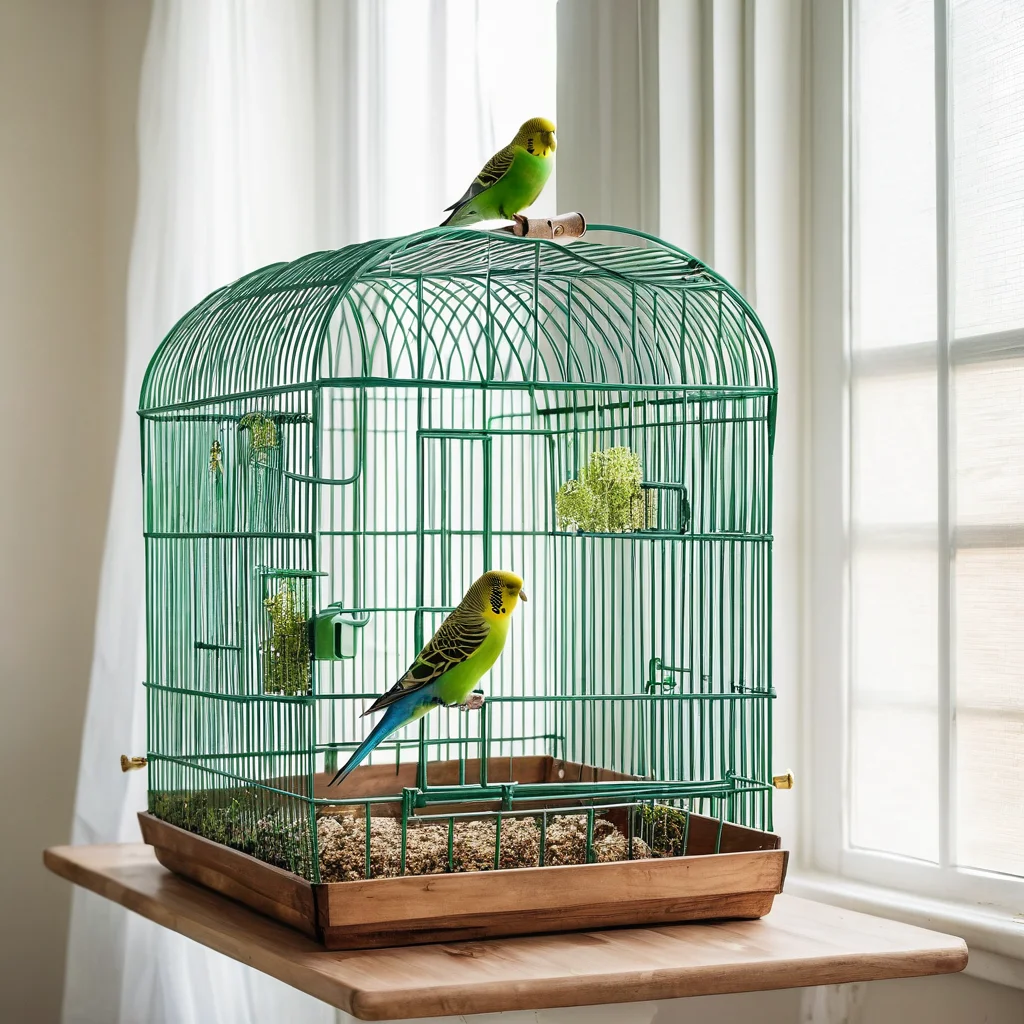
- Budgie: About 60x40x40 cm is considered the minimum for a single bird; if you keep a pair, aim for a width of 80 cm or more. The budgie is an extremely active species, and the more space it has, the happier it is.
- Canaries and finches: These birds move by flying more than climbing. A cage at least 60 cm long, wider than it is tall, is a must.
- Cockatiel: Because of its long tail, it needs both width and height; around 80x50x80 cm is a reasonable start.
- Lovebird: It may look small, but it's very strong and energetic; dimensions close to those for a cockatiel are recommended.
- Medium to large parrots such as African greys and Amazons: Cages under 100 cm wide fall short in the long run; for these species the cage should take up about as much room as a corner of a room.
An important note: these sizes assume your bird gets safe free flight outside the cage every day. If your bird spends the whole day in the cage, you need to go well above them. You can look up in detail how much space and activity each species needs in our bird species encyclopedia.
Bar Spacing: The Overlooked Safety Detail
When buying a cage, most people check the size but never check the bar spacing. Yet the wrong bar spacing carries a direct, life-threatening risk. If the gap is too wide, the bird can push its head between the bars and get stuck; this is one of the most common cage accidents in small birds.
- Budgies, canaries, finches: Bar spacing should be between 1 and 1.2 cm.
- Cockatiels and lovebirds: 1.2 to 1.6 cm is considered safe.
- Large parrots: A 2 to 2.5 cm gap is suitable; the bars should also be thick, because strong beaks can bend thin wire.
Besides bar spacing, look at the material too. Because birds are constantly climbing with their beaks, bars with chipping paint, rust or zinc coating pose a risk of poisoning. Powder-coated or stainless steel cages are safe options in this respect. Test the cage door lock as well; clever parrots easily learn to open simple latches.
The Horizontal Flight Principle: Width Matters More Than Height
The tall, narrow "tower" cages on the market look nice but go against bird anatomy. Birds don't fly vertically like a helicopter; they fly horizontally like a plane. So the space your bird can actually use is the width of the cage, not its height.
When you're torn between two cages, always choose the wide, low one. Of two cages with the same floor area, the horizontal one lets the bird flap its wings and take short flights; the vertical one only offers climbing. Climbing is a valuable activity for parrot species, but it never replaces flying. For species that don't climb, like canaries, a narrow, tall cage effectively condemns the bird to inactivity.
Perches: Material, Thickness and Placement
The plastic perches that come with a cage are usually the first part you should replace. Smooth plastic of a single thickness keeps pressing on the same spot of the bird's foot and, over time, sets the stage for foot sores.
Which perch materials are good?
- Natural branch perches: Branches from non-toxic trees such as willow, hazel and apple offer different thicknesses and also satisfy the need to chew.
- Rope perches: Their soft surface rests the feet; however, they should be replaced when the strands fray.
- Sand-covered perch: Useful for wearing down nails, but it shouldn't be used alone, and there should be only one in the cage.
What to watch for when placing perches
Don't put perches directly above the food and water dishes; droppings fall into the dishes and cause hygiene problems. Leave flying distance between perches, and don't turn the cage into a storage unit. A cage with toys in every corner is as much of a problem as an empty one; the bird has no room left to spread its wings.
Where Should the Cage Go in Your Home?
If the right cage sits in the wrong spot, your effort goes to waste. Follow these rules for placement:
- Keep it away from the kitchen: Fumes from heated Teflon pans are seriously toxic to birds. Add cooking steam, grease and temperature swings, and the kitchen is not a suitable environment for a bird.
- Protect it from drafts: The airflow path between a window and a door, and the area in front of an air conditioner or fan, can quickly make birds sick.
- Put one side against a wall: A cage standing in the middle of the room, open on all sides, makes the bird feel constantly on alert. A cage with at least one side against a wall gives a sense of security.
- Place it close to eye level: A cage on the floor makes the bird nervous; a cage placed too high weakens your social bond. Somewhere between chest and eye level is ideal.
- Be careful with direct sun: Seeing daylight is good for the bird, but the whole cage shouldn't sit in the sun; there must be a section where the bird can retreat to shade.
- Part of family life, but in a quiet corner: Birds are social animals; a quiet corner of the living room is much better than an empty room nobody goes into. Right next to the TV, however, isn't suitable because of the noise.
Cleaning Routine and Common Cage Mistakes
A clean cage is the first barrier against disease. Set up a simple routine that makes the job easier: change the paper on the cage floor every day, and wash the water and food dishes every day. Once a week, wipe down the perches and toys and scrub the grate. Once a month, empty the cage completely, wash it with hot water, and don't put your bird back in until it's fully dry. For cleaning, choose bird-friendly solutions like vinegar water instead of harsh chemicals.
Finally, let's sum up the most common mistakes:
- Buying a round cage: Cages without corners weaken the bird's sense of direction and leave no safe corner to retreat to.
- Keeping the cage on the balcony: Temperature swings, drafts and the risk of birds of prey all come together.
- Covering the floor with sand: Wet sand becomes a breeding ground for bacteria; paper changed daily is more hygienic.
- Mirror obsession: In birds that live alone, a mirror can create an artificial attachment and a behavior of feeding the reflection.
- Moving the cage often: Birds are creatures of habit; a change of location causes stress.
If you notice loss of appetite, a fluffed-up posture or changes in droppings in your bird, question the cage setup, but also see your vet without wasting time.
Frequently Asked Questions
What's the smallest cage size for a budgie?
For a single budgie, around 60x40x40 cm is considered the minimum; bar spacing should be 1-1.2 cm. If your bird can't get out of the cage during the day, you should choose a bigger cage. Go for models that are wider than they are tall.
Why aren't round cages recommended?
Round cages have no corner where the bird can take shelter, and this creates constant unease. There's also a risk of feet and nails getting caught between bars that narrow toward the top. Rectangular cages with a wide base are always a healthier choice.
Can the cage go in the kitchen or on the balcony?
Neither is recommended. In the kitchen, fumes from heated Teflon cookware are toxic to birds; on the balcony there are drafts, sudden temperature changes and stress from birds of prey. A quiet, draft-free corner in the living area of your home is ideal.
How often should the cage be cleaned?
The floor paper and the water and food dishes every day; perches, toys and the grate once a week; and the whole cage should get a deep clean once a month. Avoid scented products and harsh chemicals when cleaning; vinegar water is enough in most cases.