


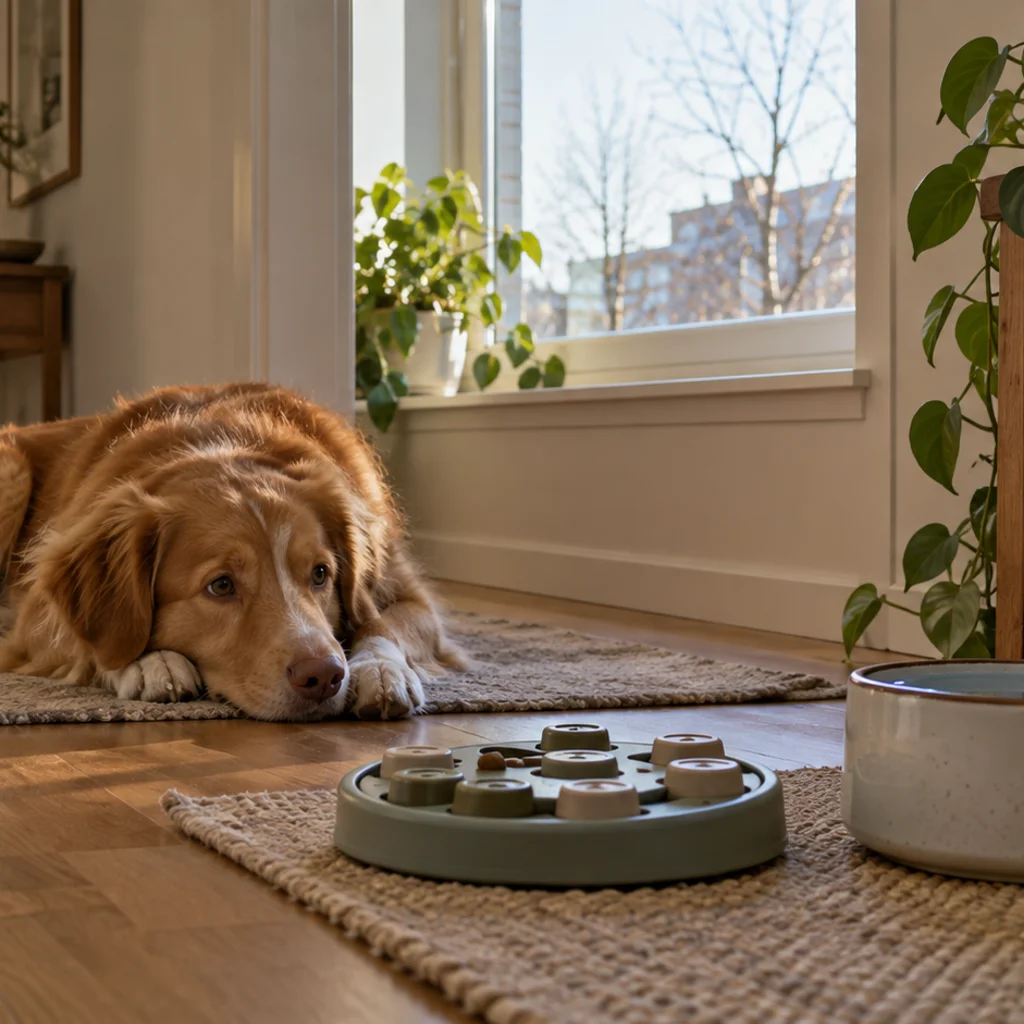

All summer, someone was home. The kids were on break, the door opened often, and the days were long. In September, that routine changes overnight. In the morning everyone leaves at the same time, the house goes quiet, and your pet starts spending most of the day alone.
Most pets get through this transition without trouble. For some, though, it comes back as restlessness, noise, destruction or potty accidents. The difference is usually whether the transition was prepared for.
The plan below doesn't ask for big changes. It covers breaking the day into parts, calming the moments you leave and come back, and spotting the early signs.
Moving from a summer routine to a school routine
Pets don't watch the clock; they watch for patterns. Cues like breakfast sounds, putting on shoes and picking up a bag are their plan for the day. When these cues change suddenly, they can no longer predict what's next, and restlessness begins.
If you can, start setting up the new routine a week or two before school starts. Shift mealtimes gradually, move walk times closer to the new schedule, and create short stretches when it's as if no one is home. The smoother the transition, the easier the first week will be.
- Shift feeding and walk times by fifteen minutes every few days; don't move them by two hours all at once.
- During the week before school, leave the house empty for short periods; start with ten minutes and build up gradually.
- If you're going to close off access to the kids' rooms, get your pet used to it before school starts, not on the same day.
- If you're setting up a new enclosed area or crate, first make it a place where good things happen.
Planning the day hour by hour
How the time alone is broken up matters as much as its total length. Before you leave in the morning, your pet's energy should be spent, their bladder emptied and their mind tired. A tired pet waits; an unprepared pet goes looking.
For dogs, the morning walk shouldn't be rushed. Instead of a ten-minute potty trip, a walk that lets them sniff tires them out far more in the same amount of time. For cats, a morning play session followed by a small meal supports their natural sleep cycle.
What should stay within reach during the day: fresh water, a resting spot, safe toys, and for cats, a litter box and a scratching area. Using a puzzle bowl or a toy with food hidden inside, instead of emptying the food bowl onto the floor, makes the food last longer.
- Don't close the curtains completely; being able to see outside keeps most cats busy.
- Leaving the radio or a low-volume broadcast on can soften sudden street noises.
- If someone can stop by the house midday, tie it to a fixed time.
- For long stretches alone, don't give all the food in the morning; set up a way to spread part of it through the day.
Early signs of separation stress
Separation-related distress usually doesn't start with one big incident. Small signs come first, and they are easy to mistake for crankiness. Caught early, it is much easier to fix.
- Restlessness that begins while you get ready: following you around, panting, yawning, lip licking, trembling.
- Long bouts of barking, howling or meowing in the first fifteen minutes after the door closes.
- Destruction aimed at doors, windows and the doormat. Damage focused on exit points, not random spots, is meaningful.
- Accidents in a pet who is already potty trained, especially on your belongings.
- Food left uneaten while alone, an over-the-top and long greeting when you return, and hair loss from excessive licking.
A practical way to spot these signs is to record the first half hour of the day with your phone. Most owners see something different from what they expected when they watch the recording: some pets fall asleep in ten minutes, while others pace by the door for an hour.
Calm the moments you leave and return
Long goodbyes don't help. When your voice and emotions rise before you leave, your pet's do too. Be quiet when you leave, skip the farewell ritual, and make the getting-ready cues meaningless. Small repetitions like putting on your shoes and sitting down, or picking up your keys and putting them back, weaken the power of these cues.
The same goes for coming back. An excited greeting the moment you walk in reinforces the tension of separation. Say a calm hello, and give attention once your pet has settled down. This may feel backward, but tying the reward to calm moments works in the long run.
When you find destruction or a potty accident, scolding after the fact does nothing; your pet doesn't connect it to the event and only learns to fear your return. Quietly clean up what happened and look for the cause in the day's plan.
Kids, responsibility and consistency
The school season means change for kids too. Sharing pet-related chores in an age-appropriate way is good for both the kids and the pet. A young child can refresh the water bowl, and an older one can take on brushing or putting on the leash.
The critical point here is consistency. In a home where everyone follows different rules, a pet can't learn what is allowed and what isn't. Set one rule on things like feeding from the table, getting on the bed and going out the door first, and have everyone at home do the same thing.
For families thinking about bringing a new pet home, the school season can be a tough start; the first weeks need a lot of attention. If you want to think it over without rushing, you can look through adoption listings and the shelter list and choose the right time yourself.
When to get help
Adjusting things at home sorts out most mild cases. But some situations need professional help: a pet who hurts themselves forcing the door or crate, breaks nails in a panic, makes noise for hours, or eats and drinks nothing while alone may be dealing with more than a habit problem.
Also, behavior changes are not always psychological. Potty accidents can be a sign of a urinary tract problem, increased restlessness a sign of pain, and loss of appetite a sign of a digestive problem. It makes sense to rule out health issues before starting behavior work; when you go to the vet, bring the video you recorded and the notes you kept.
If you get training help, choose someone who uses reward-based methods without fear or punishment. With separation anxiety, punishment makes things worse. Accidents like a door left open or a loose leash can increase during this period, so keep your pet's ID tag and microchip details up to date; if your pet goes missing, lost pet listings help in the first hours.
Frequently Asked Questions
How many hours a day can my dog be left alone?
It wouldn't be right to give a single number; age, health, potty routine and your pet's personality decide it. Puppies and seniors need more frequent breaks. If long stretches can't be avoided, plan a midday walk or help from a neighbor, and set it at the same time every day.
Will a second pet solve the loneliness?
Sometimes it helps, and sometimes you end up with two pets with problems. If the separation anxiety developed around attachment to the owner, having another pet won't change things. Before you decide, watch how your current pet gets along with other animals, and think of it as a separate responsibility, not a solution.
Is it true that my cat isn't affected by being alone?
Cats may seem independent, but changes in routine affect them. Excessive licking, peeing outside the litter box, hiding and changes in appetite are common signs of distress in cats. Because they are quiet, it often gets noticed late.
Is it useful to set up a camera during the day?
It is, because you see real behavior instead of guessing. The first half hour after the door closes is especially informative. Use the camera only for watching, not for correcting your pet remotely; talking through it increases tension in most pets.









