


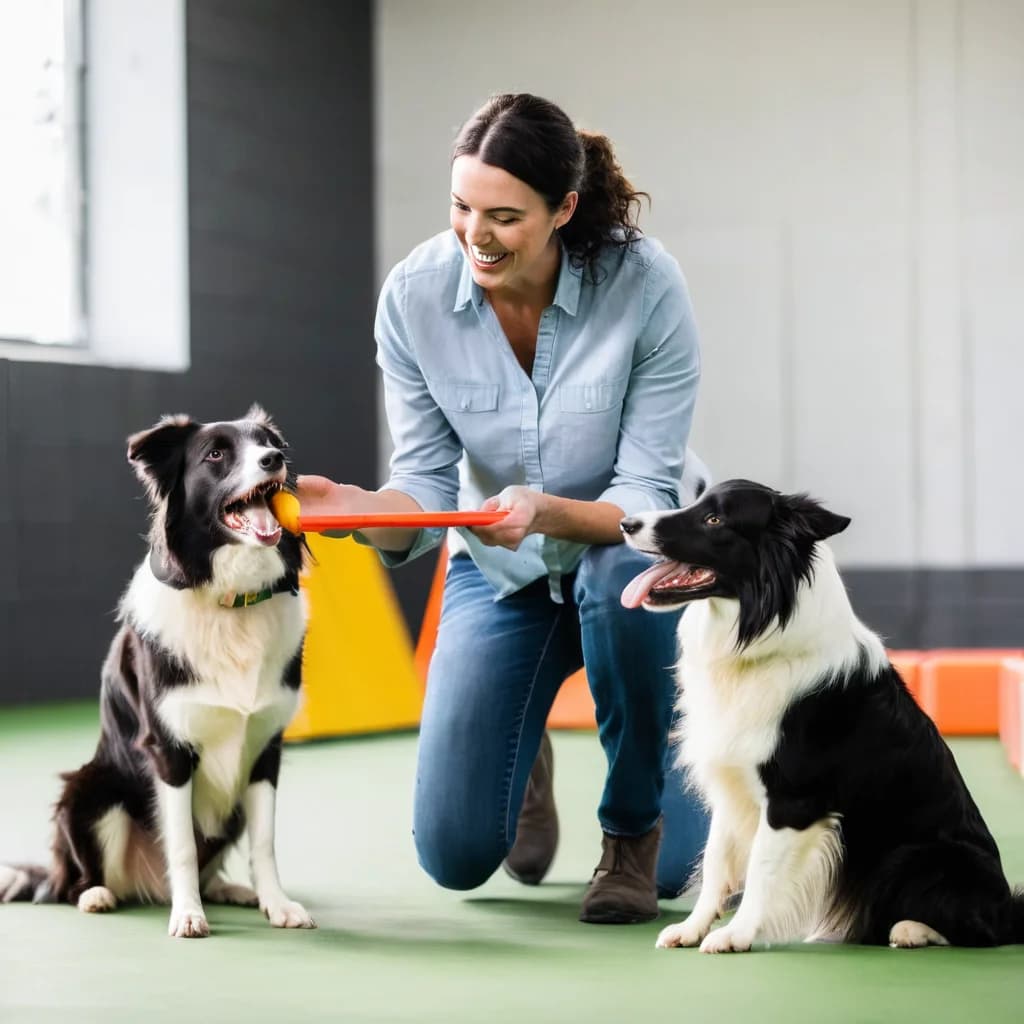

Pet owners need training for many reasons: obedience, socialization, behavior problems, sports (agility, frisbee). Choosing the right training center or trainer is critical for your pet's mental well-being. NEVER use dominance or force-based training; science-based positive reinforcement is a must. Certifications (CCPDT, IAABC, KPA), evaluating the first session, group vs private lessons. In this article we take a detailed look at choosing a pet training center.
1. Force-Free and Positive Reinforcement
- Modern science: positive reinforcement is the most effective and humane approach.
- Choke chains, e-collars, prong collars = HARMFUL.
- Alpha/dominance theory has been SCIENTIFICALLY DEBUNKED.
- "The owner has to be the alpha" = the wrong method.
- Training tools: high-value treats + a clicker + patience.
- LOOK FOR a force-free trainer, and walk away from dominance methods.
2. Certification
- CCPDT (Certification Council for Professional Dog Trainers): Widely regarded as the standard in the US.
- CPDT-KA: Knowledge Assessed.
- CPDT-KSA: Knowledge + Skills Assessed.
- IAABC (Int. Assoc. Animal Behavior Consultants): Behavior specialists.
- KPA (Karen Pryor Academy): Clicker training.
- VSPDT (Victoria Stilwell): Positive training.
- FFCP (Fear Free Certified): Focused on reducing stress.
- Official certification is still rare in Türkiye, so look for international certificates.
3. Group vs Private Lessons
- Group lessons: Socialization + focus + an environment with other pets.
- Private lessons: Specific problems + faster progress.
- For puppies: Group is ideal (socialization).
- Adult pets with behavior problems: Start private, then move to group.
- Reactive pets: Private lessons are a must.
- Price: Group is 50-70% cheaper.
4. Course Types
- Puppy socialization: Ideal for puppies 8-16 weeks old.
- Basic obedience: Sit, stand, come, stay, leash walking.
- Advanced obedience: Distance, distractions, off-leash.
- Behavior modification: Reactivity, fear.
- Agility: Obstacle courses, sport.
- Tricks: Fun tricks.
- Nose work: Scent games.
- Therapy dog: Hospital and senior visits.
5. Length and Frequency
- A standard course is 6-8 weeks, with one 45-60 minute lesson a week.
- An intensive course is daily for 2 weeks (tiring for puppies).
- For puppies, short and frequent (20 min × 3 lessons/week).
- For adults, medium length (45 min × 2 lessons/week).
- Homework is a must; training continues outside of class.
6. Owner Involvement
- Owner and pet taking lessons together = the right method.
- "Leave your pet with us, we'll handle it" is WRONG.
- The trainer teaches the owner, and the owner applies it with the pet.
- If the trainer only trains the pet, the owner won't know what to do.
- Involvement of family members matters (consistent commands).
7. Evaluating the First Session
- Does the trainer greet your pet gently?
- Do they start with rewards, with no punishment?
- Watch whether your pet is stressed.
- Is the trainer patient (doesn't get annoyed on the 10th try)?
- Do they speak in a positive tone?
- Do they give clear answers to the owner's questions?
- Do they recognize your pet's individual traits?
8. Red Flags
- Talk of "you have to be the alpha."
- Use of choke, prong or e-collars.
- No certification plus claims of a "natural" approach.
- Promising certain results (training is individual).
- Training the pet while the owner is absent (a black box).
- Rough handling or pressure.
- Promises of fast results (not realistic).
9. Prices (Türkiye, 2026)
- 6-week group course: 2,500-5,000 Turkish lira.
- 1-hour private lesson: 500-1,500 Turkish lira.
- Private package of 5 lessons: 2,000-6,000 Turkish lira.
- Board & train (live-in, 2 weeks): 10,000-25,000 Turkish lira (not recommended, your pet is away from you).
- Online lessons: 200-500 Turkish lira per lesson (an alternative).
10. Online Training Resources
- YouTube: Zak George, kikopup, Victoria Stilwell.
- Book: "Don't Shoot the Dog" - Karen Pryor.
- Apps: Pupford, Dogo, Woofz.
- Online courses: Karen Pryor Academy, Fenzi Dog Sports Academy.
- Content in Turkish is limited, but it's a growing trend.
- Owners can train their pets themselves (with enough time and knowledge).
Choosing a pet training center comes down to the formula force-free + certification + owner involvement + evaluating the first session. Training is an opportunity to build the bond between owner and pet. WALK AWAY from trainers who use dominance methods, since they harm your pet's mental well-being. A patient, science-based, gentle approach = a well-behaved pet for life. In the DoldurKabı app, ethical training centers and customer reviews are shown on a map.









