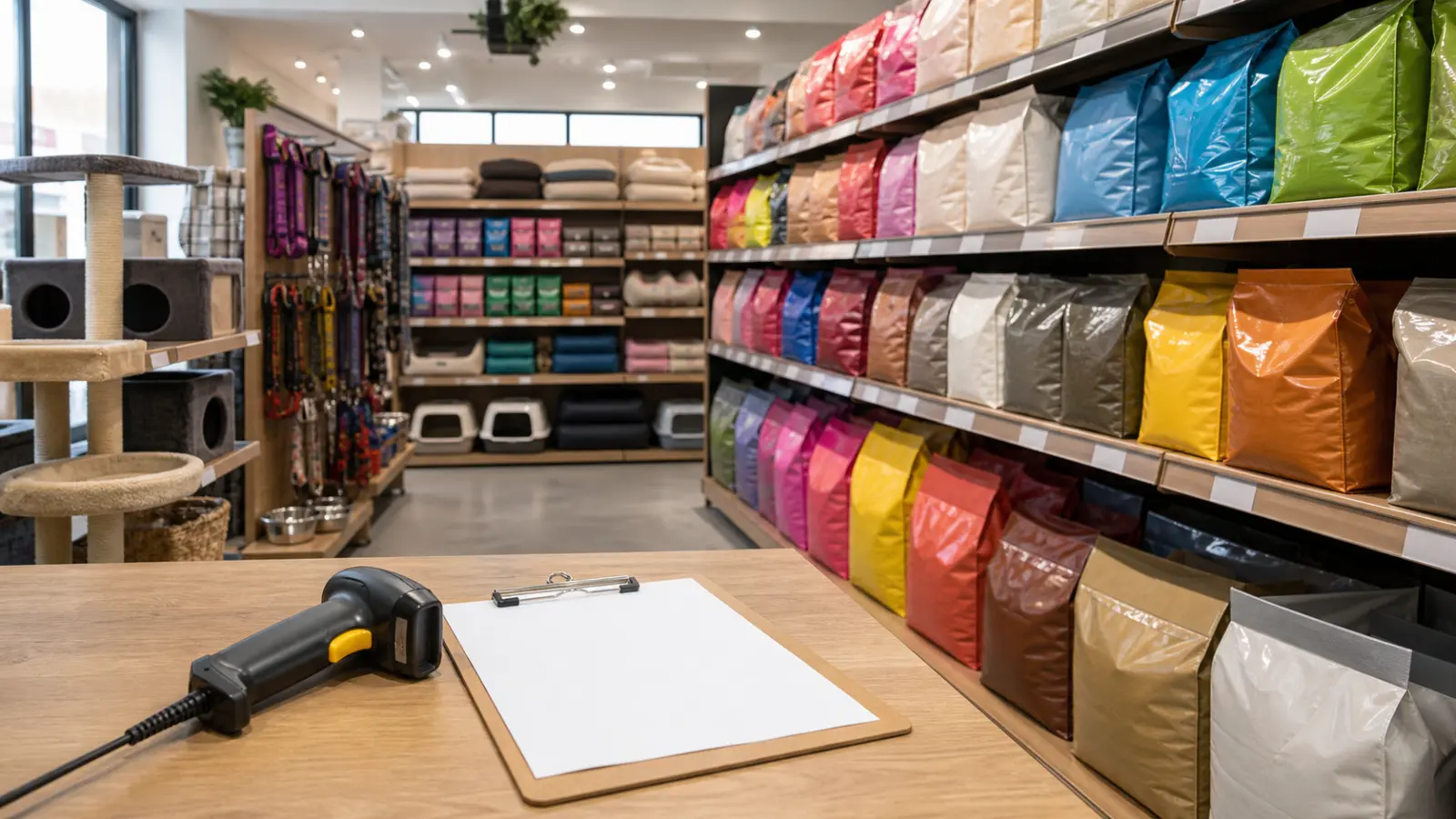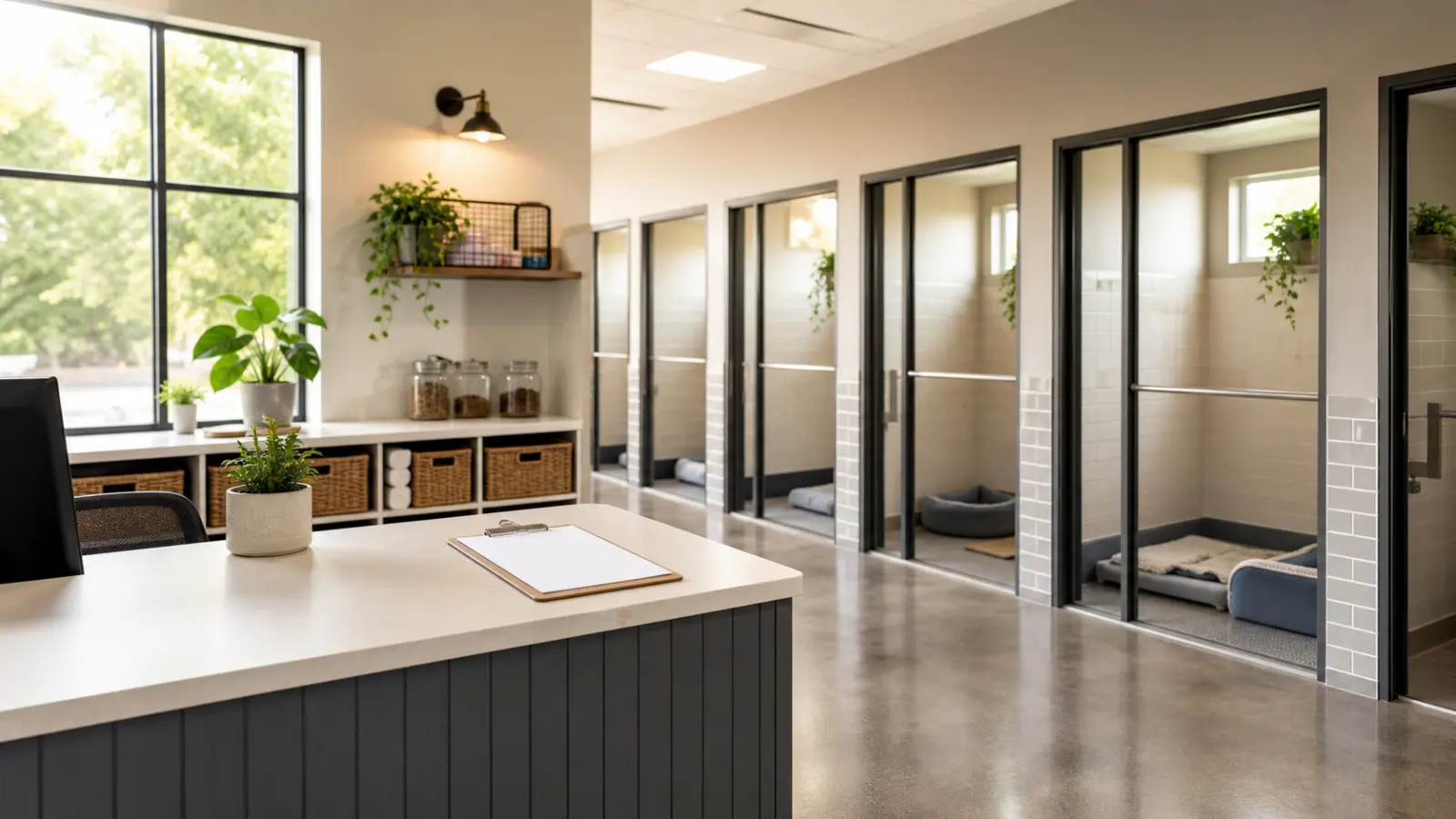

When you plan a pet hotel, looking only at how many animals you can accept is misleading. Real capacity comes from safe kennels, shared areas, the cleaning flow, staff time and how bookings move through the same day. Even when occupancy looks high, if operations are struggling, the capacity in use is more than the business can handle.
That is why you should start with a capacity model, before property listings or equipment lists. The guide to opening a pet hotel frames the first steps, while this article focuses on how to weigh daily operations and costs in the same table. The approach here is not a promise of income; as the location, scope of services and demand change, your assumptions need to be tested again.
Don't treat capacity as just the number of kennels
In your first draft, handle dogs and cats separately. Each species needs boarding kennels, a rest area, a controlled exercise area, a food prep station, storage for cleaning supplies and an entry and exit flow. Corridors, the reception area and sections set aside for isolation don't directly produce a night you can sell; even so, they are part of a safe operation.
The number of kennels that fit on paper and the number of animals you can serve at the same time may not be the same. Work out whether your staff can keep up with feeding, moving animals between areas, cleaning, check-ins and check-outs during the day. You can use three limits when setting capacity: the physical limit of the space, the operational limit of what the team can handle and the service limit that protects booking quality. The number you open for sale each day should not go above the lowest of these three.
Plan space per animal together with the workflow
Applying a single measurement for space per animal to every business is not right. The species and size of the animals you accept, whether they come from the same household and the type of boarding you offer all change how much space you need. Licensing, building use, fire safety, environmental and local government requirements should also be reviewed based on the location. Before deciding to rent or renovate, confirm the current requirements of the relevant institutions in writing.
On the floor plan, mark each kennel's door swing, the service passage and the second area where the animal can be safely moved during cleaning. If you have to pass through another animal's space to reach a kennel, the design makes the workflow harder. Noise and visual contact also affect the layout. If the reception point and the rest areas are too close together, the repeated comings and goings throughout the day can make boarding animals restless.
Prepare a net area table
Split the total usable area into sellable and support areas. Sellable areas include the boarding kennels; support areas include corridors, reception, storage, prep and cleaning points. Then add notes for each section, such as its function, how many people use it at once and the passage width needed at peak hours. This table makes it clear which support area shrinks when you want to add more kennels.
Read demand on a calendar, not night by night
Pet hotel demand is not spread evenly across the year. Holiday periods, weekends, school breaks and regional travel can change booking volume. On the other hand, demand slows down in some weeks. Renting a large space based only on the busy season means carrying the fixed cost of empty capacity in the quiet months. Planning only for the quiet season, though, can squeeze your service out of control on days when demand rises.
If you don't have past booking data, build scenarios instead of making a firm occupancy forecast. Prepare separate calendars for low, normal and high demand. For each scenario, write down how many check-ins, how many check-outs, how many occupied kennels and how much staff time you need. After the business opens, compare the forecasts with real records. The gap between forecast and reality feeds next season's staffing and booking limit decisions.
Calculate check-in and check-out load separately
Two days with the same occupancy rate can have different workloads. A day when the guests don't change and a day with many drop-offs and pick-ups don't use the same amount of staff time. That is why your capacity table should include not only the number of overnight stays but also the number of daily movements. Spreading handover times across controlled time slots can reduce crowding at reception and record-keeping errors.
Keep fixed costs in a separate table
Rent, regular staff costs, accounting, recurring items tied to licensing, software, security and certain maintenance contracts can continue even when there are no bookings. Track these in a fixed cost table. Starting by writing down how often each item comes up, when it is paid and under what conditions it might change gives you a sturdier base than starting with amounts.
Renovation, flooring, kennels, ventilation, reception equipment and initial setup supplies should be handled separately as the opening investment. Mixing these expenses with monthly operating costs gives a false picture of your cash needs. Set aside a separate share for unexpected repairs and delays as well; tying the whole budget to the visible setup items can squeeze the business right after opening.
Link variable costs to occupied nights
If food is included in the service, the products used, cleaning supplies, laundry, the variable part of water and energy use and the extra staff time tied to bookings all move with occupancy. Measuring the exact amount used for each booking is not always easy. Still, comparing total weekly use with the number of occupied nights lets you see the trend.
Food or personal items that the customer brings are not a free process either; they take time for labeling, storage, handover checks and record-keeping. When you build service packages, consider not only the supplies you buy but also the time spent running the process. That way, the effect of add-on services on capacity becomes visible.
Track your break-even point with scenarios
For a break-even calculation, you can compare monthly fixed costs with the contribution left from one occupied night. Contribution is the sale price minus the costs that rise directly with that booking. However, a single average may not represent every booking. It is clearer to look at short and long stays, different kennel types and add-on services as separate lines.
This calculation does not mean you have to sell your capacity to the limit. You need to account for operational slack, kennels closed for maintenance and unexpected calendar changes. If the model only works at full occupancy, a small cancellation, repair or drop in demand can disrupt your cash flow. Look for a setup that holds up in the more cautious scenario too.
Connect the booking calendar to capacity control
When bookings coming in by phone, message and different notebooks are not combined in one view, the same kennel can be booked twice or an area closed for maintenance can be opened for sale. online booking management can help you track date ranges, kennel types and availability on the same calendar. When choosing a system, look not only at taking bookings but also at closing off booking limits and the change history.
Add operational notes to the busy days on your calendar. Make the expected check-ins and check-outs, shift needs and closed kennels for that day visible in advance. Reviewing the coming period in a short weekly capacity meeting is easier to manage than noticing a rush at the last minute.
Test your decision with a small pilot
If possible, start in a controlled way instead of opening all your capacity for sale from day one. Measure the real cleaning time, handover flow and staff workload with fewer kennels. Raise your booking limit step by step based on your records. This reveals the gap between the theoretical capacity of the space and the capacity your team can sustain.
Come back to three questions every month: On which days did you turn down requests, on which days was there unnecessary empty space and which operational step caused delays? The answers can point to different solutions, from adding new kennels to rearranging shifts. More capacity does not always mean a healthier business; the goal is a safe service volume you can keep track of.
Frequently Asked Questions
How many kennels should a pet hotel start with?
There is no single right number. Usable space, the profile of animals you accept, support areas and the team's daily work capacity should be considered together. Measuring real times with a lower booking limit first is more revealing than relying only on the number of kennels on the floor plan.
Should you rent a permanently larger space for the busy season?
The decision should be made by looking at how long the busy period lasts together with the fixed costs you will carry in the quiet period. Compare low, normal and high demand scenarios; separately calculate the cost of space that goes unused most of the year just for a short peak.
Why does the split between fixed and variable costs matter?
Fixed costs continue even when occupancy drops, while variable costs move with booking volume. This split lets you see more clearly what one booking contributes and how much of a cash buffer you need in the quiet period.
Does a booking system solve capacity on its own?
No. A system makes availability and changes visible; setting the right booking limit still depends on records of space, staff and workflow. You need to use calendar data together with regular reviews of your operations.