
In fall, the yard and the balcony change. Leaves drop, fruit rots, humidity rises and planters get brought inside. For people, most of this is just cleanup. For dogs and cats, it means new smells and new things to put in their mouths.
The goal is not to be scared but to simplify things. It is enough to move risky things out of reach and leave the rest for normal use. The sections below gather the risks that are specific to the season.
One more thing: if you see your pet eat something, do not wait. Trying to make your pet vomit, giving a homemade mixture or trying a method you read online can make things worse. The right move is to take the packaging or a piece of what was eaten with you and go straight to the vet.
Acorns and fallen fruit
Acorns catch dogs' attention: they roll, they crunch when bitten and they look like toys. Acorns and oak leaves contain tannins and can irritate the digestive system when swallowed. A whole swallowed acorn can also cause a blockage; this is a more serious risk for small dogs.
Walnuts, chestnuts and yard fruit that drop in the same season can cause problems too. Fruit that stays on the ground and rots gets moldy. Some fruit pits are not suitable for dogs, and large pits can get stuck in the intestines.
Spiky seeds among drying grasses are also part of this season. Burrs and similar seeds stick to fur and can get between the toes, into the ear canal and under the eyelid. After a walk, run your hand between the toes, under the front legs and around the ears, and remove any stuck seeds before they work into the skin. If swelling between the toes, constant licking or shaking of one ear begins, do not poke around yourself; show it to your vet.
- Sweep the area under oak trees regularly; redirect a dog that picks up acorns on walks early.
- Do not leave fallen fruit lying around; throw it in a lidded bin.
- If you see vomiting, repeated retching, loss of appetite, belly tenderness or lethargy, do not wait; go to the vet.
- For a dog that makes a habit of picking up acorns, you can talk to your vet about using a muzzle during walks.
Mushrooms and mold
With the fall rains, mushrooms pop up in yards, along park edges and at the base of trees. Telling mushroom species apart takes expertise; you cannot know whether one is safe just by looking. So the practical rule is clear: pull any mushrooms that come up in your yard out by the roots and throw them away where your pet cannot reach them.
Mold is a separate topic. Compost piles, rotting fruit, wet leaf piles and forgotten bread scraps all grow mold. Animals that have eaten moldy food can show nervous system signs such as trembling, unsteadiness and muscle twitching. This counts as an emergency.
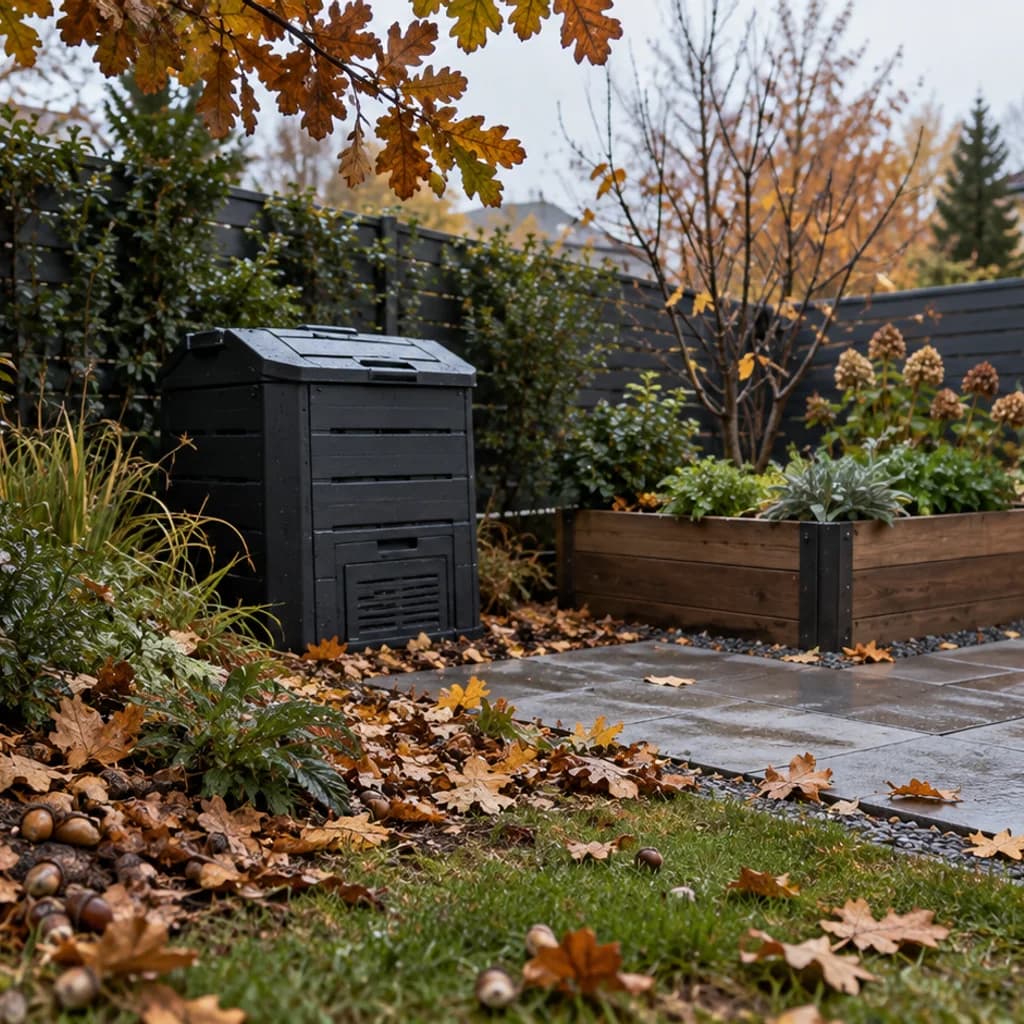
- Keep compost in a lidded container that will not tip over; do not leave an open pile.
- Do not leave wet leaf piles sitting for long; mold and insects gather underneath.
- Look under a pile before you spread it out; broken pot pieces and shards of glass become invisible under leaves.
- If you saw your pet eat a mushroom or something moldy, take a sample and go straight to the vet.
- On the balcony, empty the standing water that collects in planter saucers.
Kitchen scraps: onion, garlic and more
In fall, homes that make pickles, tomato paste and other winter preserves end up with more kitchen scraps. When onion and garlic skins or leek and shallot trimmings are tossed into the yard or the compost bin, they end up somewhere your pet can reach.
Plants in the onion family can damage blood cells in cats and dogs; whether they are raw, cooked, dried or powdered makes no difference. Cats are more sensitive to this. Grapes and raisins can cause kidney problems in dogs. Chocolate, coffee grounds and products with sweeteners are not suitable either.
Signs may not show up right away. If you see weakness, loss of appetite, pale gums, dark urine, vomiting or diarrhea, do not wait. If you know how much was eaten and when, that information matters for the assessment.
- Collect organic waste in a lidded container; do not dump it in a corner of the yard.
- Keep the kitchen door closed while making winter preserves; pick up any skins that fall on the floor right away.
- Hang peppers, eggplants and similar produce drying on the balcony high enough that your pet cannot reach them.
Potted plants and soil additives
When the weather cools, planters on the balcony come inside. Suddenly, plants that were out of reach outdoors are in the living room. Cats tend to nibble on new greenery.
Many ornamental plants are not suitable for cats and dogs. Lilies pose a serious risk for cats; even the pollen or a leaf can be dangerous. Dieffenbachia, geranium, oleander, sago palm and similar plants are not suitable either. Before you bring a new plant home, learning its name and checking whether it is safe is the most practical approach.
- Place the planters you bring inside on shelves your cat cannot reach, or in a closed room.
- Cover the top of the soil with pebbles or an unscented cover; it cuts down on digging and soil eating.
- Store fertilizer, flower bulbs, slug bait and insecticides in a locked cabinet.
- Offer your cat a safe alternative like cat grass; that is how its need for greenery gets redirected.
If you do not know a plant's name, take a photo of it. When a problem comes up, showing the plant instead of describing it speeds up the vet's assessment.
Setting up a safe yard and balcony
Arranging the space from the start is less work than chasing risks one by one. Split the yard in two: the area your pet uses freely, and a closed-off area where tools, fertilizer, compost and planters are kept. Make the division physical; a gate or a fence does the job.
Fall is also the time to check fences. Wet soil loosens, wind brings down branches and gaps open at the base of the fence. When an escape point forms, your pet finds it before you do.
- Check the base of the fence, under the gate and the lock on the yard gate at the start of the season.
- Bring your pet inside when you use a leaf blower, pruning tools or yard machinery.
- If you have a pool or water tank, cover it; a water surface covered in leaves can look like solid ground.
- Add night lighting; on evenings that get dark early, the risk of losing sight of your pet in the yard goes up.
- Empty rainwater collecting in buckets, tubs and overturned planters left in the yard; your pet will drink from them.
A balcony needs its own setup. If a cat's head fits between the railing posts, that gap counts as a way through; wire mesh that does not block airflow closes it. Window screen mesh is not enough, because it tears under your pet's weight. Chairs and boxes leaning against the railing act as steps, so pull them over to the wall side.
In case of an escape, keep the ID tag and microchip information up to date. When a pet goes missing, the first hours are decisive; you can post an alert for your area through lost pet listings, and use the same place for an ownerless animal you find. If you are thinking about bringing a new pet into a home with a yard, finishing these changes before you look at adoption listings will make things easier.
Frequently Asked Questions
My dog swallowed an acorn. What should I do?
Do not try to make your dog vomit on your own. Note how much was swallowed and when, keep your dog under observation and call your vet. If there is vomiting, retching, signs of belly pain, loss of appetite or a change in bowel movements, go without waiting. The risk of a blockage is higher in small breeds.
How can I tell whether the mushrooms in my yard are harmless?
It is not safe to tell them apart by appearance. The practical approach is to clear out every mushroom that comes up in the yard without sorting them, and throw them away where your pet cannot reach them. If you suspect your pet ate one, take a sample and go to the vet.
Can I compost with a pet around?
Yes, but with a closed system. An open pile holds mold and rotting food, and its smell draws attention. Use a lidded container that will not tip over and that your pet cannot open; do not put onion, garlic or moldy food in your yard compost.
How do I check whether the plants in my home are safe?
First learn the plant's name; the florist or the plant's label will have it. Once you know the name, checking the plant by species is easy. When you are not sure, move the plant somewhere your pet cannot reach and, if needed, show your vet a photo and ask.