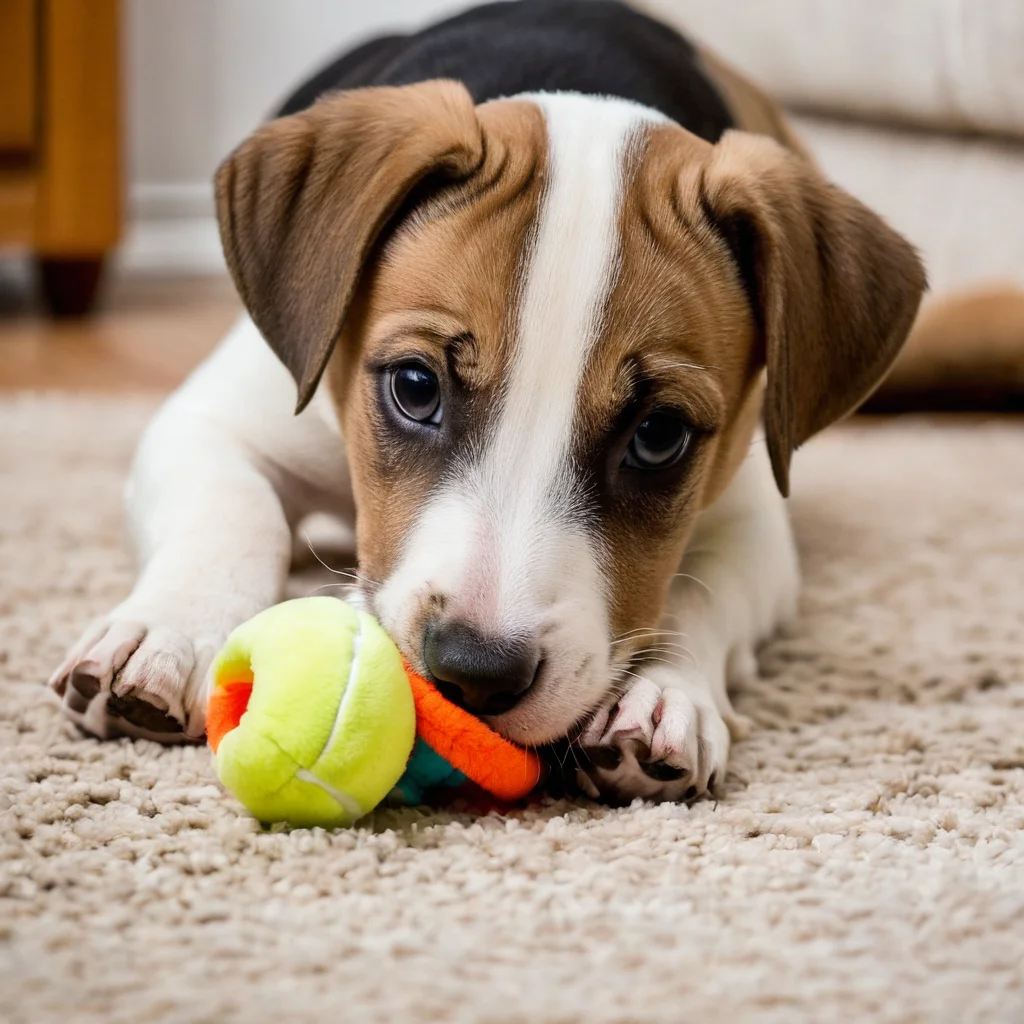

Your puppy bites your hands, your clothes, your fingers: it's one of the most common complaints of new owners. Most owners panic: "Is my dog aggressive?" No. This is normal puppy behavior: teething + exploring through play + social learning. But if it isn't managed, excessive play biting can carry on into adulthood. In this post, we look at why puppies bite, how to teach bite inhibition and the common mistakes to avoid.
1. Why Do Puppies Bite?
- Teething: Between 2 and 7 months, to manage itching + pain.
- Exploring through play: For dogs, "the mouth is their hands": they experience everything with their mouth.
- Social learning: Leaving the mother too early (before 6 weeks) → incomplete bite inhibition.
- Excitement / overstimulation.
- Attention seeking: When the owner reacts, it rewards the behavior.
- Tiredness: A tired puppy is cranky + bitey.
- Boredom: Not enough physical + mental stimulation.
2. Aggression or Play?
Usually it's play:
- The puppy wags its tail.
- The "play bow" pose (front end down, rear end up).
- Light biting, not deep.
- The puppy comes close to the owner.
Signs of concern (rare in puppies):
- A frozen + tense body.
- Low-pitched growling.
- Raised hackles.
- Teeth fully showing.
- Fear-based: tail tucked + ears back.
- If you see these signs, see a veterinary behaviorist.
3. Bite Inhibition
Dogs learn "how hard to bite" from their mother + littermates:
- If a puppy bites too hard, the mother or a littermate gives a "yelp" (a short cry) → play stops.
- The puppy gets it: too hard = game over.
- This learning is most intense between 4 and 8 weeks.
- A puppy separated early (before 6 weeks) doesn't learn this skill well enough.
- The owner teaches it by playing the "mother role".
4. The Right Method: Yelp + Withdraw
- When the puppy bites hard: make a loud "AHHH!" or "OUCH!" sound.
- Pull your hands away right away and STOP the game.
- Ignore the puppy for 30 seconds.
- Then go back to playing, but more gently.
- If it bites hard again, yelp + stop again.
- 2-3 weeks of consistent practice → the puppy learns "gentle play".
5. The Redirection Technique
- When the puppy bites your hand: offer a chew toy right away.
- The message is "Bite this, not my hand."
- If it chews the toy, reward + praise.
- Always keep a toy ready in your pocket.
- Frequent repetition → the puppy learns what it can and can't bite.
6. Teething Support
- Between 2 and 7 months, teeth itch + hurt.
- A chew toy chilled in the fridge.
- A frozen carrot stick (for larger puppies).
- Freeze a wet towel for soft chewing.
- A Kong + frozen water.
- Puppy-specific chew toys.
7. Never-Do List
- ❌ Holding the puppy's jaw shut (pain + fear).
- ❌ Flicking its nose (anger + fear).
- ❌ Rolling it over + pinning it down (the alpha myth: ineffective + harmful).
- ❌ Constant yelling (the puppy thinks it's a game + keeps going).
- ❌ Spraying water in its face (random punishment).
- ❌ Long periods shut in a crate (wrong learning).
- ❌ Encouraging hand biting because it's "cute" (a problem that will continue in the adult dog).
8. Kids + Puppies
- If the puppy bites a child, the child panics + screams (and the puppy gets even more excited).
- Teach the child calm ways to interact with the puppy.
- The puppy should not be out of sight with the child, only under adult supervision.
- Fast running + screaming triggers the puppy's prey drive.
- Teach the child the "frozen tree" pose (it lowers the excitement).
9. Exercise + Mental Stimulation
- A tired puppy = a calm puppy.
- 2-3 play sessions a day (15-20 min each).
- Chew toys + puzzle feeders.
- Sniffing games.
- Training sessions (mental tiredness).
- An overtired puppy gets cranky, so offer a quiet sleeping spot.
10. How Long to Expect
- Puppy biting is natural; it can last up to a year, tapering off over time.
- Teething peaks at 4-5 months.
- By 6-8 months, bite inhibition is largely in place.
- After 12 months, play biting is rare.
- If an adult dog still bites too much, see a veterinary behaviorist.
Puppy biting is normal developmental behavior, and the right redirection is a learning process. The formula of yelp + withdraw + redirect + teething support teaches bite inhibition in 6-8 months. Punishment + yelling have the OPPOSITE effect. In the DoldurKabı app, you can find vet clinics experienced in behavior + puppy training on a map.