


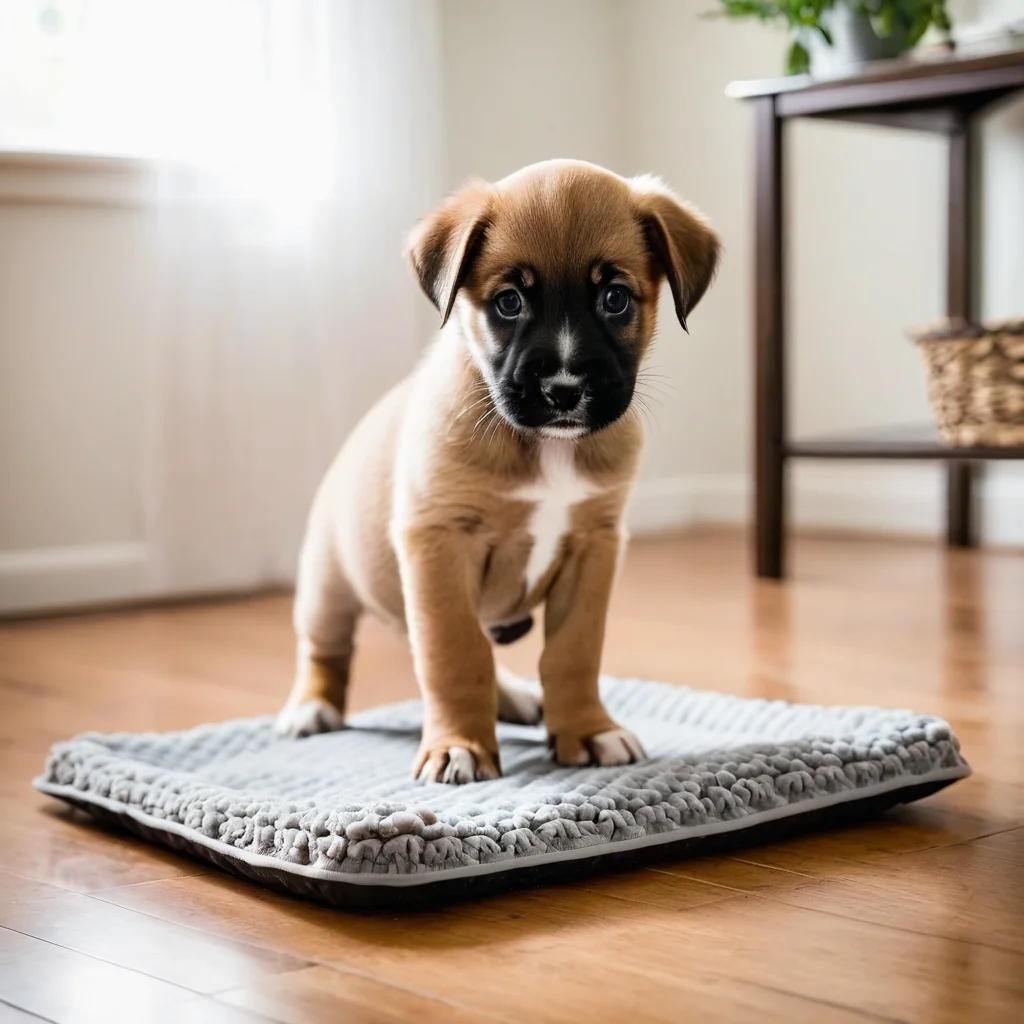

Puppy potty training is the most stressful but most important early training area of being an owner. With the right method, a clean home is possible in 7-14 days. The wrong approach means months of accidents, a frustrated owner and a fearful dog. Starting with pads vs going straight outside are the two main methods. The formula is an hourly routine + positive reinforcement + patience. In this article, we look at the full potty training protocol.
1. A Puppy's Bladder Capacity
- A puppy can hold it for "age in months + 1" hours.
- 2 months old = 3 hours, 4 months old = 5 hours, 6 months old = 7 hours.
- Longer at night (metabolism slows during sleep).
- More often after activity, excitement and eating.
2. When a Puppy Needs to Go
- Right after waking up.
- 15-30 minutes after eating.
- 5-15 minutes after drinking water.
- After play and excitement.
- Every 1-2 hours (for a puppy).
- Before bed.
3. Two Methods: Pad vs Outside
Potty pad (apartment + balcony):
- Advantage: safe for a puppy that has not finished its vaccines.
- Advantage: bad weather + working owners.
- Disadvantage: an extra step to switch to outdoors.
- Disadvantage: some dogs mistake the pad for a rug.
Straight outside:
- Advantage: a lasting outdoor potty habit.
- Disadvantage: risk for a puppy that has not finished its vaccines.
- Disadvantage: bad weather, going out at night.
Pads for the first 16 weeks, then switching to outdoors, is the ideal combination.
4. Pad Training Protocol
- Place the pad in a fixed spot in a specific corner.
- Take the puppy to the pad (when it wakes up, after eating, after play).
- Say a "potty" command (keep the word consistent).
- If it goes, immediately give a reward + praise ("good job").
- If there is an accident, NO punishment.
- Use an enzyme cleaner (something like Nature's Miracle) to clean up accidents.
- Dampen the pad slightly (with the smell of old urine) to strengthen the signal.
- 2 weeks of consistent pad use → the puppy will go there on its own.
5. Outdoor Training Protocol
- Start after vaccines are complete (16 weeks+).
- Take the puppy out to the yard or street every 2 hours.
- Same spot + same word ("potty").
- If it goes, immediately give a reward + praise.
- If it does not, go back inside after 5-10 minutes and try outside again 30 minutes later.
- Do NOT give a reward as soon as you get home (the reward is outside = when it goes).
- 2-3 weeks of consistency → the puppy gets it.
6. Sample Hourly Routine
- 06:30: Wake up, potty break.
- 07:00: Breakfast.
- 07:30: Potty break.
- 09:00: Play + potty break.
- 11:00: Potty break.
- 12:00: Lunch.
- 12:30: Potty break.
- 14:00: Potty break (after waking up).
- 16:00: Potty break + play.
- 18:00: Dinner.
- 18:30: Potty break.
- 21:00: Potty break.
- 22:30: Last potty break, bedtime.
7. Managing Nights
- A 2-month-old puppy is woken up 1-2 times a night.
- A 3-month-old once.
- A 4-month-old can usually hold it through the night.
- A potty break before bed is a must.
- Stop water 1-2 hours before bed.
- If the puppy cries: does it need to go, or does it want attention? Quietly take it out to the potty spot and come back inside, with NO play.
8. Handling Accidents
- When you catch it in the act:
- A calm "no" + take it to its potty spot.
- Yelling + hitting are OFF LIMITS.
- Rubbing the puppy's nose in it is OFF LIMITS (it learns the wrong thing).
- When you find it later:
- Do NOTHING; the puppy will not understand.
- Clean it up quietly.
- An enzyme cleaner is a must (water alone does not remove the smell).
9. Common Mistakes
- Inconsistency: sometimes a reward, sometimes not.
- Punishment + yelling: the puppy becomes AFRAID of going potty and hides it.
- Moving the pad to random places: the puppy gets confused.
- A spot near the food bowl: dogs keep their potty area separate from their food.
- Restricting water too much: dehydration does harm.
- Expectations: a puppy does not learn instantly; 14 days minimum.
10. Potty Problems in Adult Dogs
If an adult dog suddenly starts going inside the house:
- Rule out medical causes (UTI, diabetes, kidney) → vet.
- Behavioral (anxiety, marking) → behaviorist.
- Cognitive dysfunction in seniors.
- Muscle weakness in seniors (incontinence).
- Changes in the environment (moving, a new pet).
Puppy potty training: the formula of hourly routine + positive reinforcement + patience gives you a clean home in 14 days. Never punish or yell; the dog becomes afraid and starts hiding it. In the DoldurKabı app, you can find vet clinics experienced in behavior and training on the map.









