


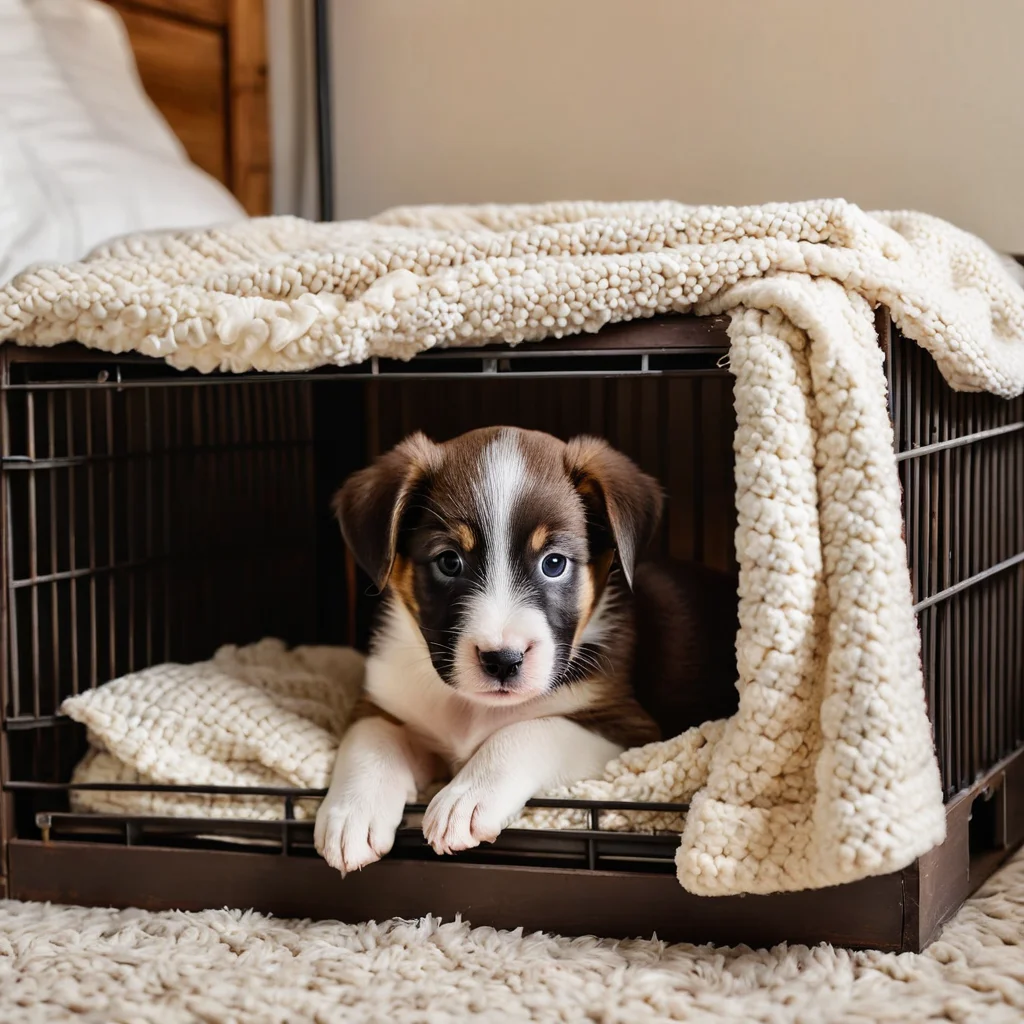

Crate training (bed/crate training) is the most misunderstood yet most useful training for a puppy. It is not "locking up"; it gives your dog a safe den, potty control, and preparation for travel. Done right, your dog sees its crate as its own comfortable space. Done wrong, it leads to lasting fear and anxiety. In this post we look at a crate training protocol using the positive method.
1. Benefits of Crate Training
- Potty control: Dogs naturally do not potty where they sleep.
- A safe space: A place your dog can retreat to when stressed.
- Preventing destruction: Protecting the house while the owner is away.
- Travel prep: Plane and car transport.
- Vet/groomer: Waiting calmly in the crate.
- Recovery period: Rest after surgery.
- Protection from kids: The puppy's "own" space.
2. The Right Crate Size
- Your dog should be able to stand fully upright.
- It should be able to turn around, with one body length of space.
- It should be able to lie down comfortably (stretched out).
- Too big is a NO: the dog will use one corner as a toilet and the other for sleeping.
- For large breed puppies, a "growing crate" that can be expanded with a divider.
3. Choosing a Crate Type
- Wire crate: Good ventilation + visibility. Folds open and closed. The most popular.
- Plastic crate (Vari-kennel): Air travel. Gives the puppy a safe "den" feeling.
- Soft fabric crate: Light + portable, but a puppy may chew it.
- Furniture-style crate: Attractive, blends into the home.
4. The First Introduction (Week 1)
- Put the crate in the middle of the living room with the door open.
- Inside: a soft bed + a familiar toy + treats.
- Let the puppy explore at its own pace.
- When it goes in, treat + praise.
- Do not close the door yet.
- 3-5 days of free access to build a positive association.
5. Closing the Door (Week 2)
- With the puppy inside, offer a treat.
- Close the door for 5 seconds → open → treat.
- Gradually increase to 10 sec, 30 sec, 1 min.
- Do not wait for the puppy to start crying.
- Close and open before it cries → that is the lesson.
- End every session on a positive note.
6. Increasing the Time (Week 3)
- 5 min → 15 min → 30 min → 1 hour.
- Stay nearby at first.
- Then go to another room for 5 min, 15 min.
- Then leave the house for 30 min.
- If the puppy stays calm, that is success.
- Maximum time: age in months + 1 hour (a 3-month-old puppy: 4 hours max).
7. Keeping Busy with a Kong and Food
- Before crate time, fill a Kong with frozen food.
- While the puppy eats it, the owner leaves the house.
- The puppy learns "crate = tasty activity."
- When you come home, take the Kong away; it is not a constant reward.
8. Common Mistakes
- Using it as punishment: The dog will hate the crate.
- Letting it out while it cries: The dog learns "if I cry, I get out."
- Increasing the time too fast: Puppy anxiety.
- Too long: Confining for 8+ hours is unethical.
- Crate all night, every night: A puppy's potty needs are not met.
- No bed: A hard floor is uncomfortable.
9. Using the Crate at Night
- In the first weeks, the puppy sleeps in the crate at night, inside the bedroom.
- If the puppy cries: does it need to potty? Quietly take it out → potty → back to the crate → NO play.
- After 3-4 months, the puppy can hold it all night.
- Adult dogs generally do not need to be in a crate at night.
10. Moving from the Crate to Independence
- At 1 year old, an adult dog generally moves out of the crate.
- First a specific room is open to it, then the whole house.
- Some dogs go into the crate on their own; that "safe space" feeling is a success.
- If the crate is not in use, keep it ready for travel or a recovery period.
Crate training is a kind of training that benefits a puppy for life when done with the positive method. The right size + introduction + gradual time + never punishment: this formula makes your dog love its crate. Potty training, preventing destruction, and travel prep are bonuses. In the DoldurKabı app you can find vet clinics experienced in puppy training on the map.









