


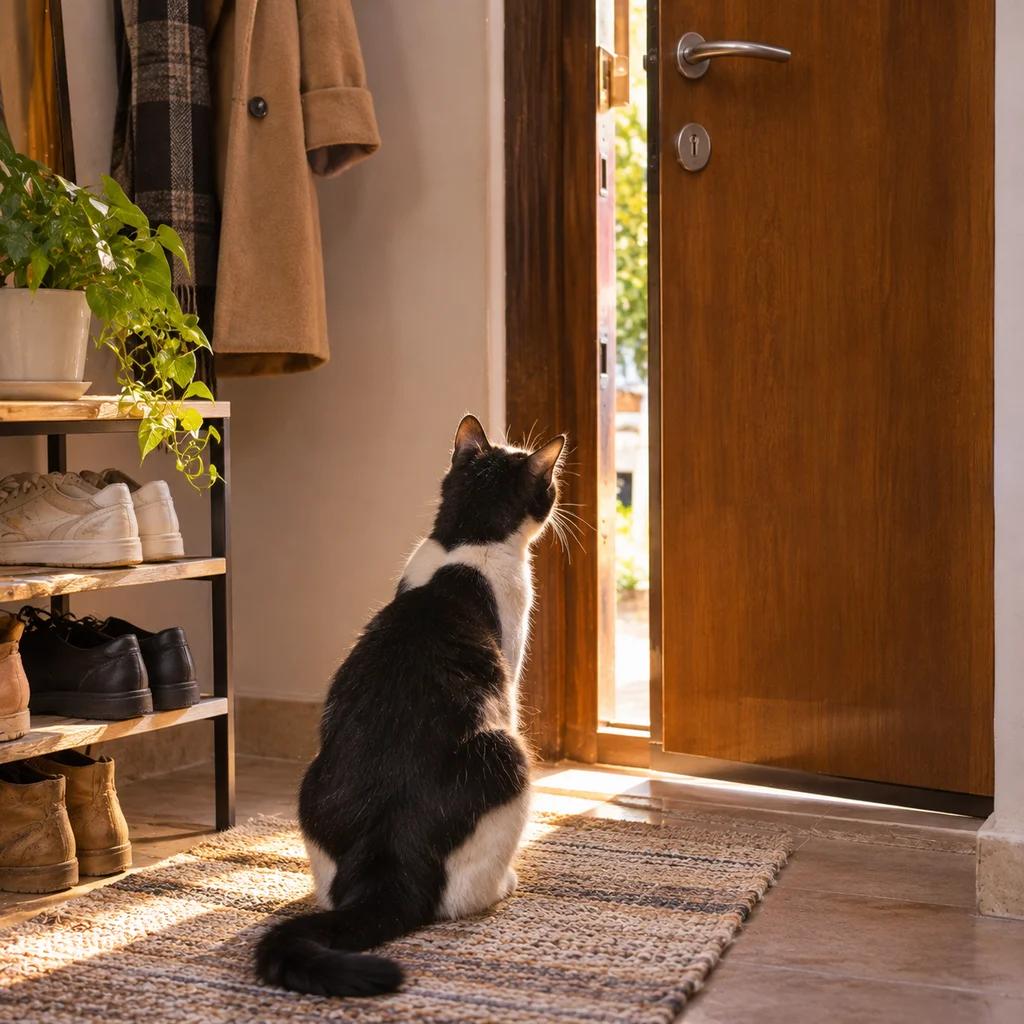

The moment you put your key in the door, you hear paws inside, and as soon as you crack it open your cat shoots between your legs and onto the stairs. Sometimes it stops on the landing to sniff, sometimes it goes down a floor, and sometimes it goes much farther. Door dashing is one of the common ways indoor cats get lost. The good news: with patience and punishment-free methods, this habit can be reduced.
In this article, we explain why cats run for the door and the simple changes you can make at home.
Why do cats run for the door?
For cats, the other side of the door is an endless source of curiosity. Smells from the stairwell, the neighbors' voices, traces of other animals. For a cat that spends most days the same way at home, that gap means a chance to discover something new.
Understanding the reason also shapes the solution. Behind door dashing there is usually one or more of these:
- Boredom: A cat that doesn't get enough play and stimulation during the day spends its energy at the door.
- The greeting habit: If it gets its first attention at the door when you come home, it learns to wait there.
- Smells and sounds: If another cat or dog roams the hallway, curiosity grows.
- Not being spayed/neutered: Cats in their breeding season can be much more persistent about getting outside. It's a good idea to talk about this with your veterinarian.
Make the doorway boring and the home interesting
Instead of trying to forbid door dashing altogether, redirecting your cat's attention somewhere else gives longer-lasting results. For that, the doorway needs to be a place where "nothing happens."
When you come home, don't pet or talk to your cat right at the door. Come in first, take off your shoes, put down your bag, then go to the living room and give it attention there. This way it learns that the greeting happens inside the home, not at the door. It may feel hard at first, because your cat is waiting for you at the door and it can seem like you're ignoring it. But within a few weeks, the habit of waiting at the door fades.
A waiting spot of its own
Set up a high spot a little away from the door where your cat can see the entryway. It could be a cat tree, a shelf by the window or the top of a cabinet. Leave a treat there before you come home, or toss a piece of kibble there as soon as you walk in. Over time, your cat learns to wait for you on that high spot instead of at the door.
A little routine for coming and going
Everyone in the household acting the same way is essential for the training to stick. These steps can help when you come and go:
- Distract before you leave: A few seconds before opening the door, toss a toy or treat to the far end of the home. Step out while your cat runs to it.
- Open the door slowly when coming in: First open a small gap, look inside, and wait if your cat is close. Block the gap with one foot, then come in.
- Deliveries and guests: When the doorbell rings, put your cat in a room and close the door. These are the moments when escapes happen most often.
- Talk with your kids: Discuss together what children need to watch out for when opening the door.
Inner doors and physical barriers
While training is in progress, it's good to add a layer of safety. If there is a door between the entryway and the living room, closing that inner door before opening the front door makes escape almost impossible. If there is no such door, a baby gate or screen in the entryway, high enough that your cat can't jump over it, can do a similar job.
Rather than putting things by the door to bother your cat, leaving that area empty and uninteresting is a gentler approach. Punishments like spraying water, yelling or hitting your cat with the door shake its trust in you, and a cat that runs off in fear is harder to find.
Windows and balconies matter as much as the door
While you make the doorway safe, don't forget the windows and balcony. A curious cat that can't get out the door may try an open window or the gaps between balcony railings. For windows you leave open, consider a sturdy net or screen, and on the balcony, an enclosure your cat can't get through.
Help it burn energy during the day
Behind door dashing there is often an unmet need for play. Play games that mimic hunting a few times a day, even briefly. Chasing a wand toy, kibble hidden on the floor, food puzzles or a spot by the window where it can watch birds. Offering a small meal after play completes the hunt, eat, rest cycle, and your cat will be calmer.
Understanding your cat's personality helps too. Some breeds and some personalities are more curious and more active. You can find information on the energy levels of different breeds on the cat breeds pages.
How to get it back when it's on the landing
When your cat bolts out and onto the stairs, the first reaction is often to run after it. But a cat being chased goes down or up another floor. Instead, stop and stay calm. Leave the door open, shake the food bowl or rustle the treat bag from inside. Step back a few paces and clear a path for it to return.
If your cat is standing on the landing sniffing, crouch down next to it and let it sniff your hand. If you're going to pick it up, do it gently and firmly, then give it a treat inside. That way, coming home is also paired with something pleasant. Scolding your cat after getting it back makes it harder for it to come to you the next time.
The first weeks with a newly adopted cat
A cat that has just arrived doesn't know its home yet and may see the world beyond the door as a way back to its old life. Cats that have lived on the street before may especially look for a way out in the first weeks. During this time, use the entryway with extra care, always close the inner door and cut down on guest traffic. As your cat adopts the home as its own territory, its interest in the door usually fades.
If it escapes anyway: be prepared
Despite every precaution, one day the door may be left open. It's a good idea to prepare a few things now just in case:
- Make sure your cat is microchipped and that the contact details in the registration are up to date.
- You might consider a breakaway collar for your cat with a tag showing your phone number.
- Keep a few recent photos taken in daylight that show its whole body in a separate folder.
When a cat escapes, the first places to check are usually the stairwell, the floors above and below and the basement. If you can't find it nearby, opening a lost pet listing without losing time helps you widen the search.
Frequently Asked Questions
Should I punish my cat for running to the door?
No. Yelling or spraying water doesn't satisfy your cat's curiosity about the door; it only lowers its trust in you. Distracting it, moving the greeting inside the home and playing enough during the day give longer-lasting results.
Does spaying/neutering reduce door dashing?
In cats that aren't spayed or neutered, the urge to go outside can rise noticeably during breeding periods. We recommend talking with your veterinarian about whether spaying/neutering is right for your cat and about the timing.
How long does it take for this habit to change?
It varies from cat to cat. If everyone in the household follows the same rules, most cats start waiting at the door less within a few weeks. What matters is being consistent.
My cat just wanders around the landing and comes back. Should I still take precautions?
Yes. A cat that stays on the landing today may one day slip out through an open building door or a basement window. Reducing the door habit early helps prevent your cat from getting lost later on.









