


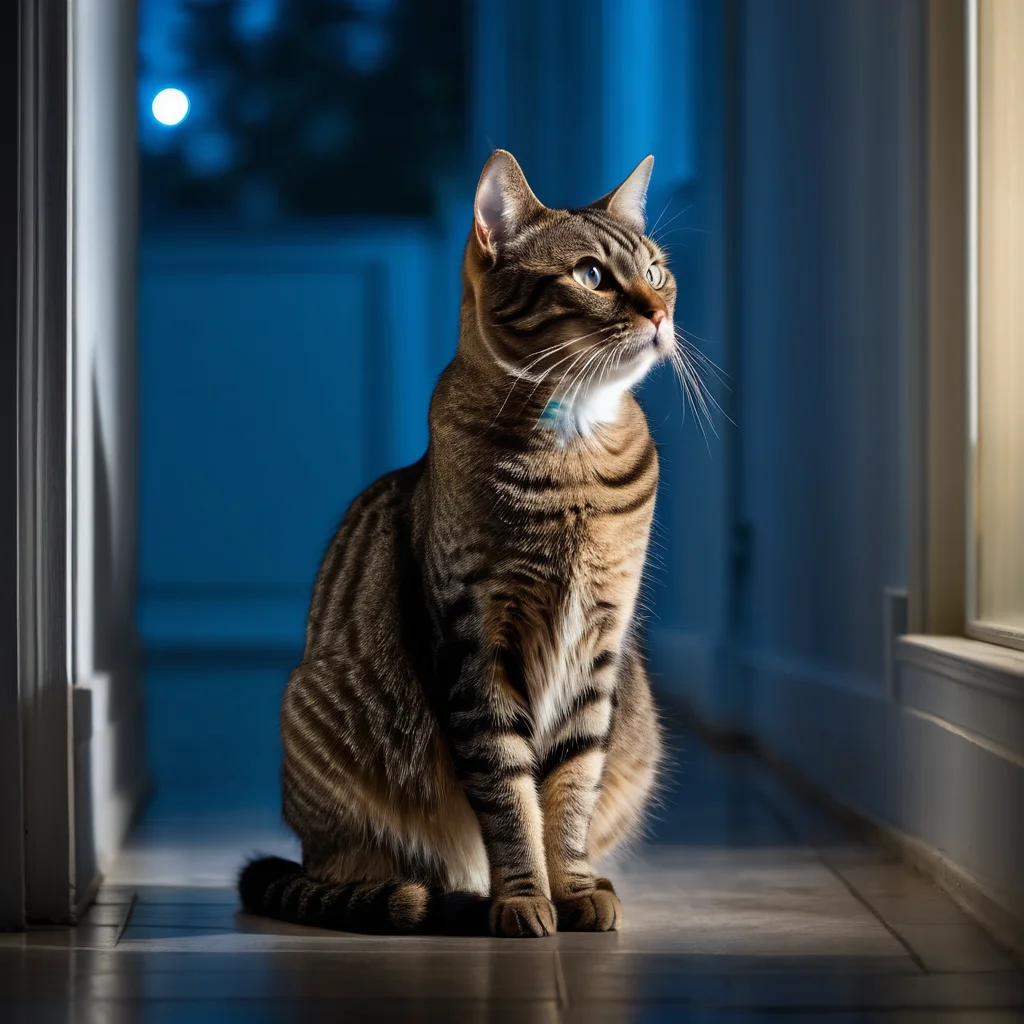

It's 3 a.m. and, in the middle of your sleep, your cat is meowing loudly in the hallway. In the morning you wake up tired while the cat snores peacefully. This scene is one of the most common complaints cat owners share. There are 7 different reasons a cat meows at night, and each one has a different solution. This post helps you tell them apart and gives you practical steps to get your sleep back.
1. Cat Nature: Crepuscular
Cats are "crepuscular" animals: they are most active at dawn and dusk (twilight and sunrise). These are their natural hunting times. That's why an energy peak around 04:00-05:00 and 18:00-20:00 is normal. You can't expect a cat to be completely silent at night, but meowing at an abnormal level is a different matter.
2. 7 Common Causes
1. Boredom and Pent-Up Energy
Not enough stimulation and play during the day means the cat wants to burn off energy at night. This is the most common cause in indoor cats.
Solution:
- An intense 15-20 minute play session in the evening before bed (feather wand, laser).
- A small meal right after, following the natural hunt-catch-eat-sleep cycle.
- Your cat needs to be "satisfied" before bedtime.
2. Hunger
An early dinner plus a cat's fast metabolism means hunger toward morning.
Solution:
- Move dinner time to 22:00-23:00.
- An automatic feeder can serve a small meal at 06:00.
- A food puzzle toy for the night.
3. Attention Seeking
If the owner gets up and responds after the cat meows, the cat learns: "If I meow, I get attention."
Solution:
- Don't react. It's hard, but with 2-3 weeks of consistency it passes.
- Enough quality attention during the day (play, affection).
- A reward in the morning when you first get up, if there was no meowing.
4. Aging and Cognitive Decline (Dementia)
In cats 12 and older, meowing at night is a classic sign of dementia: disorientation plus a disrupted sleep rhythm.
Solution:
- A vet checkup to rule out other causes.
- A dim light source at night (so the cat can find its way).
- Cognitive support prescribed by your vet (Aktivait, omega-3).
- Reinforce a regular routine.
5. Hyperthyroidism
In cats 10 and older, hyperthyroidism causes hyperactivity and excessive meowing (especially at night). Detailed guide.
Solution: See a vet for a T4 blood test. Once treatment starts, the meowing drops noticeably.
6. Mating Season (Unneutered Cats)
In an unneutered cat, the hormonal cycle means loud meowing at night. In males it gets intense when they hear other cats.
Solution: Spaying/neutering, the right choice for both health and behavior.
7. Pain or Illness
Urinary tract infection, arthritis, dental pain: a cat expresses discomfort by meowing.
Solution: Meowing that starts suddenly or is unusual calls for a vet exam.
3. What Is Your Cat Saying? Types of Meows
- Short "meow": Greeting, attention.
- Long, drawn-out "meeeooow": Usually a demand: food, attention, a door.
- High-pitched, choppy: Excitement, such as when seeing a bird.
- Low-pitched with hissing: Complaint, threat.
- Meowing with growling: Pain or intense stress.
- Screaming: Mating or severe pain.
Owners learn to tell their cat's sounds apart; a meow that is "different from usual" is a warning sign.
4. Managing Sleeping Arrangements
- Bedroom door closed: A clear boundary. A separate bed or room for the cat.
- A soft cat bed with a familiar scent.
- Water and (if needed) a small nighttime snack.
- A quiet toy (soft plush).
5. Common Mistakes Owners Make
- Responding to the meowing. It reinforces the behavior.
- Punishment. Spraying water or yelling leads to stress and lost trust.
- Too little play during the day. Pent-up energy.
- Always feeding at the same hour. With flexibility, the cat's sleep rhythm shifts.
- Treating sudden meowing as normal. A possible medical cause gets overlooked.
- Impatience with a senior cat. Dementia is individual; don't assume an older cat is just "spoiled".
6. A Consistent 4-Week Training Plan
The protocol for behavioral meowing:
- Week 1: Evening play and a late final meal. Don't react at night.
- Week 2: A reward in the morning when you first get up "for being quiet" (food, attention).
- Week 3: The meowing decreases. Reinforce the routine.
- Week 4: The new routine settles in.
Inconsistency means failure. If you react even one night, the learning breaks down.
7. Frequently Asked Questions
I let my cat into the bedroom. There's no loud meowing, but it still wakes me up.
Sleeping in the same room strengthens your bond, but some cats keep up their nighttime activity by jumping and playing on the bed. If you need a boundary, use a separate room and let the cat get used to it over time.
My cat is 3 months old and meows a lot at night. Is that normal?
A kitten newly separated from its mother and adjusting to a new home will meow a lot in the first weeks. A familiar scent (the mother's blanket), a warm water bottle and a ticking clock (which mimics a heartbeat) help. It settles down within 2-3 weeks.
I have two cats and they yell at each other at night.
It's territorial competition. Follow the n+1 resource rule (litter boxes, food, beds). Detailed guide.
My cat meows excessively, constantly, night and day.
That's abnormal, and a vet checkup is a must. Hyperthyroidism, pain and kidney disease are considered.
Are automatic feeders safe?
Yes, with programming and portion control they are very useful. For a diabetic cat, get your vet's approval.
My cat is screaming. What should I do?
It may be acute pain or mating season. In an unneutered cat it's hormonal; in a neutered cat, suspect pain and see a vet.
My cat meows when I'm away for a long time.
Separation anxiety is common in dogs but also happens in cats. Food puzzles, distractions and Feliway pheromones help.
Final Word
Nighttime meowing can usually be solved, whether it comes from boredom, hunger, aging or illness. The right diagnosis plus a consistent approach means calm nights for both owner and cat.
Log your behavior notes and vet checkup dates in DoldurKabı Pet Health Tracking.
This guide is for information only; with constant meowing or meowing that starts suddenly, always get a vet exam.









