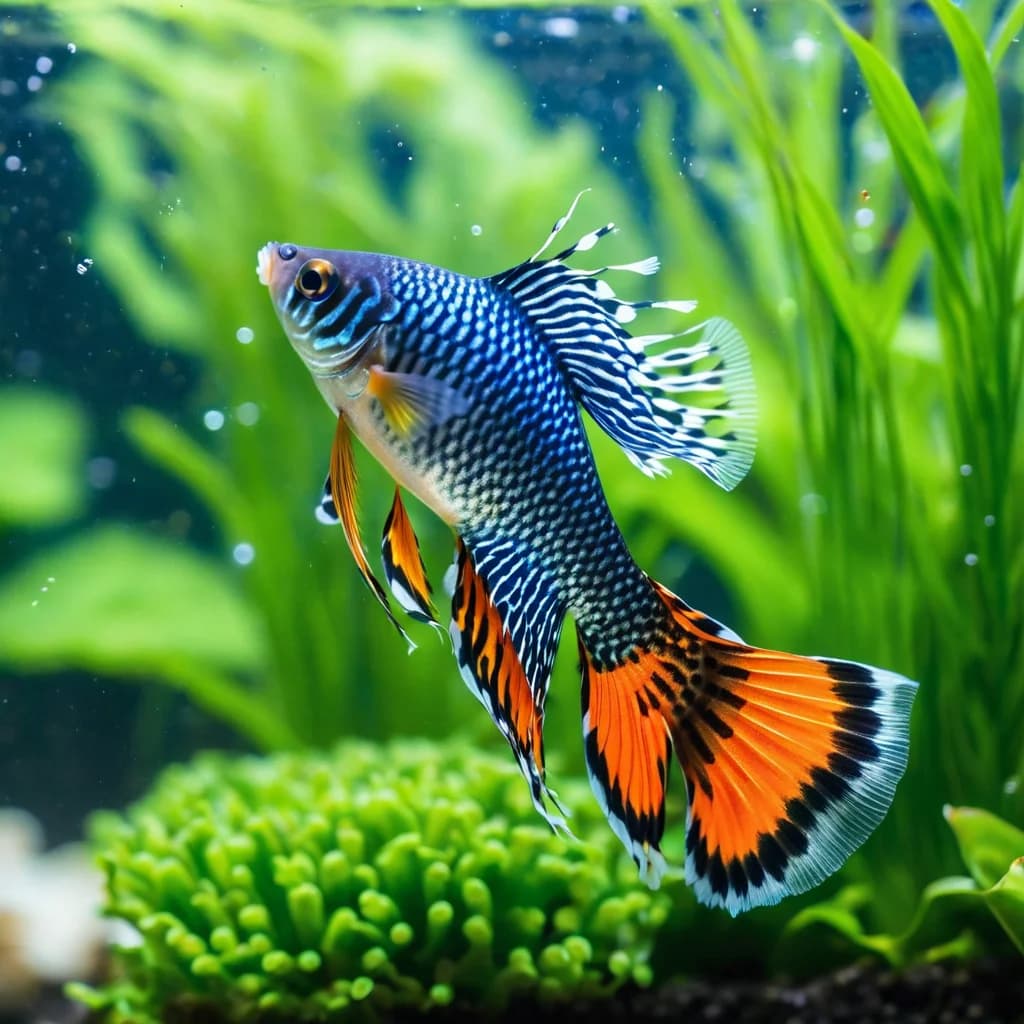

Sooner or later, everyone who gets into the aquarium hobby crosses paths with guppies. With their colorful tails, lively nature and forgiving temperament, these little fish are a joy for beginners and experienced fishkeepers alike. Also known as lepistes in Türkiye, guppies turn your aquarium into a real feast for the eyes with their bright colors and energetic swimming when the right conditions are in place.
But the "hardy fish" label is sometimes misunderstood. Guppies can tolerate small mistakes, yet for a long, healthy life they need stable water parameters, balanced feeding and the right group setup. On top of that, they are livebearers, so an unplanned setup can quickly end up as a far more crowded tank than you expected.
In this guide we cover all the basics of guppy care, from tank size to water temperature and from the male-to-female ratio to protecting fry. For more detail on the species' origins, physical traits and general profile, take a look at our guppy encyclopedia page.
Aquarium Conditions: Size, Equipment and Water Parameters
Guppies are small fish, but that doesn't mean they can live in a tiny bowl. Because they are active and breed fast, a 40-60 liter aquarium is ideal to start with. For a small group 40 liters may be enough, but since the population grows quickly once the females start giving birth, it always pays to think a little bigger.
- Filter: Choose a sponge filter or an internal filter with a sponge-covered intake. Filters with strong suction can pull in tiny fry.
- Heater: Guppies are a tropical species; in homes where room temperature fluctuates, a thermostatic heater is a must.
- Live plants: Plants like Java moss, anubias and duckweed support water quality and give fry natural hiding spots.
- Lighting: A steady light cycle of 8-10 hours a day is enough for both the plants and the fish's biological rhythm.
After setup, the critical step is waiting for the nitrogen cycle to complete. Adding fish to a newly set up aquarium right away is the most common cause of ammonia poisoning. For routine care, a weekly water change of 20-25 percent with aged or conditioned water is enough.
Water Parameters and Temperature
Guppies have a wide tolerance range, but to bring out their colors and keep their immune systems strong, you should aim for the ideal ranges:
- Temperature: They can live between 22-28 degrees; the ideal range is 24-26 degrees.
- pH: 6.8-7.8 is suitable; they like slightly alkaline water.
- Hardness: They do better in moderately hard to hard water; very soft water can cause problems in the long run.
- Ammonia and nitrite: These should always be zero. Keep nitrate low with regular water changes, too.
A simple drop test kit lets you spot problems before the fish get sick. Remember: sudden changes are more dangerous than the values themselves. During water changes, it is always safer to keep the temperature difference small and correct values gradually.
Male-to-Female Ratio and Group Setup
Guppies are easy to sex: males are small, slender and showy; females are larger, fuller and usually paler. Males spend most of the day chasing females. If there aren't at least two or three females for every male in the tank, this constant pressure causes serious stress for the females.
Stress, in turn, lowers immunity and opens the door to disease. That is why the classic recommendation is a ratio of 1 male to 2-3 females. If you don't want fry and just want a colorful tank, an all-male group is also a valid option; with enough space and hiding spots, males can live together peacefully.
How Do You Feed Guppies?
Guppies are omnivores; in the wild they eat both tiny creatures and bits of algae and plants. In the aquarium you should mimic this variety:
- Staple food: A quality flake or micro-pellet food forms the backbone of their diet.
- Live and frozen extras: Brine shrimp, daphnia and bloodworms given a few times a week noticeably brighten their colors.
- Plant-based support: Foods with spirulina or a small piece of boiled spinach support digestion.
- For fry: Powdered food, crushed flakes or newly hatched brine shrimp in several small meals a day.
Feed adults once or twice a day, only as much as they can finish in two minutes. Overfeeding harms the water more than the guppies themselves; leftover food that sinks to the bottom raises the ammonia load and sets off a chain of problems.
Livebearing and Protecting the Fry
One of the things that makes guppies special is that they give birth to live young. Instead of laying eggs, they give birth to fry that are ready to swim after a pregnancy of about four weeks. Dozens of fry can be born at once, and a female can store sperm after a single mating and keep giving birth for months. So if there is even one pregnant female in your tank, get ready for a fry surprise.
A pregnant female is easy to recognize: her belly grows noticeably, takes on a boxy shape, and the dark spot near the anal fin becomes much more visible.
Ways to keep fry alive
- Dense planting: Thick plants like Java moss create natural shelters where fry can hide from adults.
- Breeding box: A female close to giving birth can be moved into a breeding box for a short time; however, keeping her there for days causes stress, so keep it brief.
- Separate grow-out tank: If you want a safe method, you can raise the fry in a small grow-out aquarium.
Once the fry are too big to fit in the adults' mouths, they can safely join the main tank. Otherwise, sadly, adult guppies may eat their own young.
Compatible Tank Mates
Guppies are peaceful community fish and live happily with species of a similar temperament. Calm species like neon tetras, platies, mollies, corydoras and otocinclus make good neighbors; invertebrates like cherry shrimp are usually compatible too.
On the other hand, long, flashy tails are practically a target for some species. Stay away from active fin-nipping barbs, male bettas and large, aggressive species. When choosing tank mates, also make sure all species like similar water parameters; to compare the needs of different species, you can check the species profiles in our fish encyclopedia.
Common Diseases and Their Signs
Most diseases seen in guppies are triggered by poor water quality and stress. Catching them early is half the treatment:
- Ich (white spot): White dots like grains of salt appear on the body and fins; the fish rubs itself against decor and gravel. Raising the temperature gradually and quarantining the sick fish is the classic approach.
- Fin rot: The fin edges turn white, wear down and fray; it is almost always linked to water quality.
- Fungal infections: Cotton-like white growths stand out on the body.
- General warning signs: Clamped fins, loss of appetite, sitting motionless at the bottom or rapid gill movement at the surface show something is wrong.
If something seems off, the first thing to do is test the water and move the sick fish to a separate quarantine tank. If the symptoms get worse or spread through the group, it is better to consult a vet who works with exotic animals rather than trying medications on your own.
Frequently Asked Questions
How long do guppies live?
The average lifespan of a guppy is two to three years. With stable water parameters, balanced feeding and a stress-free environment, they can get close to the upper end of that range.
Is a heater necessary in a guppy tank?
Yes. Guppies are a tropical species, and room temperature that swings between day and night weakens their immunity. Keeping the water steady at 24-26 degrees with a thermostatic heater is a simple but effective way to prevent disease.
When can I move guppy fry to the main tank?
Fry can be moved to the main tank once they are too big to fit in the adult fish's mouths. Depending on feeding frequency and temperature, this usually takes four to six weeks. Moving them too early can mean they get eaten.
How do I tell male and female guppies apart?
Males are small, slim and brightly colored; their anal fin has turned into a rod-like structure called a gonopodium. Females are larger, round-bellied and paler, with a fan-shaped anal fin.