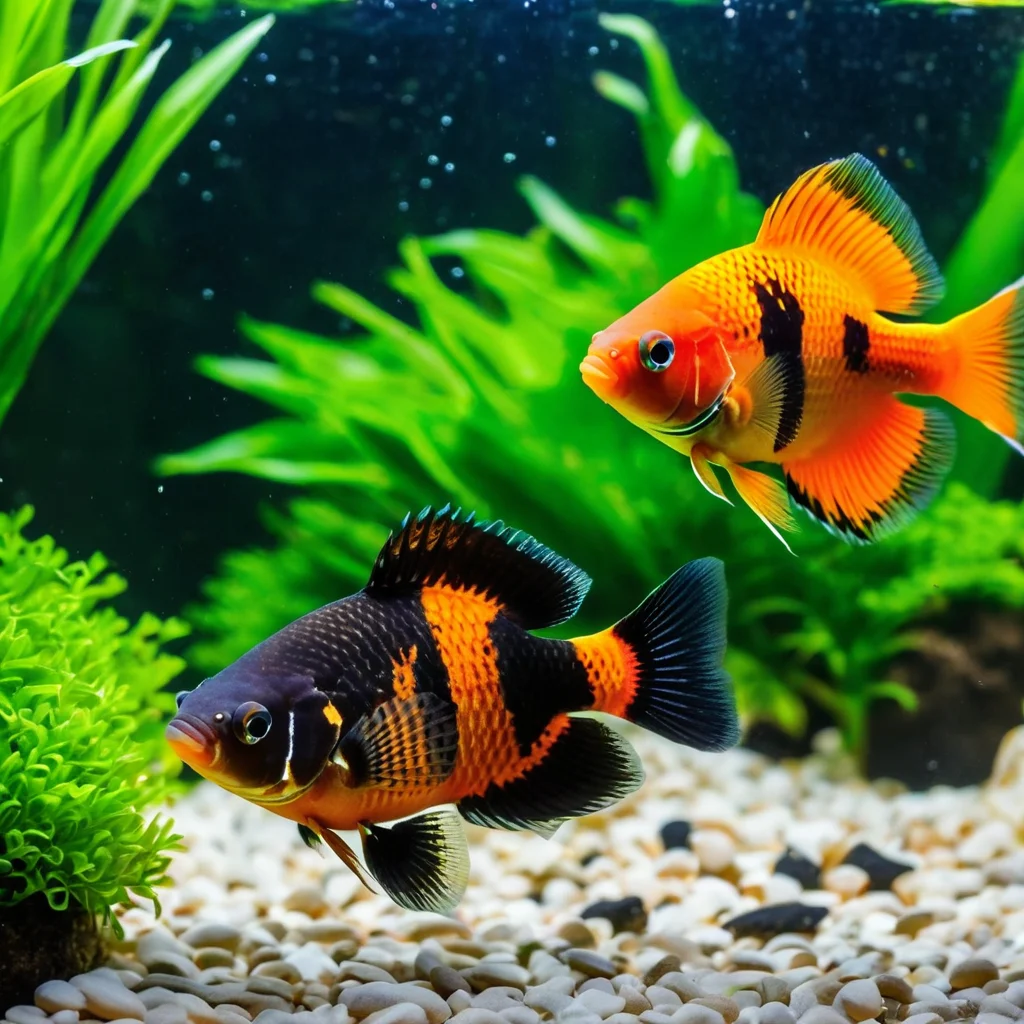

If you're new to the aquarium hobby, two names will come up again and again: molly and platy. Both are livebearing, hardy and colorful fish. They tolerate small swings in water parameters, are easy to feed and, because they're always on the move, they're a real joy to watch. On top of that, you don't need to make any special effort to breed them; if conditions are right, they'll have babies on their own.
These two species are often mixed up, because both come from the same family, Poeciliidae. Still, there are important differences in their care that you should know about. The molly is a flexible fish that can tolerate salt added to the water, while the platy is strictly a freshwater fish. Their size, temperament and tank needs also differ.
In this article, we go step by step through what mollies and platies have in common, how they differ, ideal water conditions, feeding routine, the birth process and fry care. By the end, you'll be able to decide with confidence which species suits your aquarium better.
What They Have in Common: Why They're Ideal for Beginners
What makes mollies and platies beginner-friendly is that both are livebearers. Instead of laying eggs, they give birth to tiny fry that can swim and look for food right away. These species spare you the hassles of egg care, incubation and a delicate larval stage.
Other advantages the two species share include:
- Hardiness: They tolerate small deviations in water parameters much better than most sensitive species.
- Peaceful temperament: They're non-aggressive fish that do well in community tanks.
- Color variety: They come in orange, yellow, black, Dalmatian-spotted and dozens of other variations.
- Easy feeding: They're omnivores; they can live healthy lives even on a good-quality flake food.
You can find detailed profiles of both species on our molly encyclopedia page and our platy encyclopedia page.
Molly or Platy? The Key Differences
If you're still deciding, these differences will point the way:
- Size: Adult platies usually stay around 4-6 cm. Mollies can reach 8-12 cm depending on the variety; sailfin mollies get especially large.
- Tank needs: The smaller platy is happy in a medium-sized tank. The molly wants more swimming space.
- Salt tolerance: The molly is a flexible species that can adapt to slightly salty (brackish) conditions. The platy lives in pure freshwater; adding salt doesn't do it any good.
- Temperament: The platy is almost always calm. The molly is peaceful too, but male mollies may chase each other, so keep the number of males low.
In short, if you have a small aquarium, the platy will be more comfortable; if you have a larger setup, the molly will. You can also keep the two together; we'll get to that shortly.
Tank Setup and Water Conditions
Both species like similar water parameters, so the basic setup is the same:
- Temperature: 24-27 degrees is ideal for both. You'll need a heater.
- pH: 7.0-8.2, meaning neutral to slightly alkaline water. They don't like acidic water.
- Water hardness: They prefer moderately hard water. In most parts of Türkiye, tap water already meets this need.
- Volume: Around 60 liters is enough for a small group of platies; for a group of mollies, aim for 80-100 liters or more.
- Maintenance routine: Change 20-25 percent of the total volume once a week and clean the filter regularly.
Adding plenty of live plants to the aquarium supports water quality and also gives future fry places to hide. Hardy plants such as anubias, java moss and vallisneria work well for this setup.
What Does the Molly's Salt Tolerance Mean?
In the wild, the molly can live across a wide range of water, from fresh to brackish. This flexibility makes it hardy, but there's a common misconception: you don't have to add salt to the aquarium to keep mollies. Mollies live without any problems in a clean, stable, well-maintained freshwater tank. Salt only comes into play in certain special cases, and since aquarium plants and other freshwater fish are sensitive to salt, it shouldn't be used in mixed tanks.
Feeding: A Plant-Heavy Menu
Mollies and platies are omnivores, but plant matter plays an important part in both of their diets. The molly in particular leans toward an algae- and plant-heavy diet; in the wild, it grazes on algae by scraping it off rocks. You can set up their feeding routine like this:
- Choose a good-quality flake or granule food as the staple; foods with spirulina are especially good for mollies.
- A few times a week, add protein with live or frozen food (bloodworms, brine shrimp, daphnia).
- Now and then you can offer blanched spinach, zucchini or cucumber slices; remove any pieces that aren't eaten within a few hours.
- Feed once or twice a day, only as much as the fish can eat in two to three minutes. Overfeeding is the most common mistake that ruins water quality.
Birth and Fry Care
Livebearers breed surprisingly easily; if you have males and females in your tank, it's only a matter of time before you see fry. Pregnancy lasts about four to six weeks. A pregnant female's belly swells noticeably, and a dark spot (the gravid spot) becomes visible near the anal fin.
In a single birth, a platy usually has 20-50 fry and a molly 30-100. The real challenge here is keeping the fry alive, because adult fish (including the mother) may eat them. To reduce fry losses:
- Keep dense clusters of plants and moss in the tank; the fry spend their first days hiding there.
- You can move a female who's about to give birth to a separate breeding box or a small tank; but keeping her in the breeding box for a long time stresses her, so keep it short.
- Feed the fry powdered fry food or finely crushed flakes; several small meals a day are better than one big meal.
- The fry can join the main tank at about four to six weeks, once they're too big to fit in the adults' mouths.
A word of caution: uncontrolled breeding can overcrowd a tank quickly. You can manage the population by choosing the number of males and females carefully (or keeping a single sex).
Compatible Tank Mates
Since mollies and platies like similar water parameters, they live together comfortably. Peaceful species you can add alongside them include:
- Guppy: A classic companion from the same family that likes the same water parameters.
- Swordtail: Compatible; just remember that platies and swordtails can crossbreed.
- Corydoras: A calm cleaner that makes use of the bottom of the tank.
- Otocinclus: Tiny and harmless, and helps keep algae in check.
- Zebra danio: An active but non-aggressive schooling fish.
Stay away from some barb species that tend to nip fins and from large fish with predatory mouths. To compare the needs of different species, you can browse our fish encyclopedia.
Frequently Asked Questions
Can mollies and platies live in the same aquarium?
Yes, they get along fine. Their temperature, pH and hardness needs overlap, and both are peaceful. The only condition is that the aquarium is big enough for both groups to swim comfortably. Because the two species come from different genera, they don't crossbreed.
Do I have to add salt to a molly tank?
No. Mollies tolerate salt but don't need it. A clean, stable, slightly alkaline freshwater tank is enough for mollies. Don't use salt in planted or mixed-species tanks; it can harm the other inhabitants.
Do I need to separate the fry from the mother?
If the tank is heavily planted, some of the fry will survive on their own. If you want to save more fry, you can briefly separate the female before she gives birth, or move the fry to a separate grow-out tank after birth. Once the fry are too big to fit in an adult's mouth, they can go back.
How many fish should I start with, and what should the male-to-female ratio be?
Starting with a small group, say four to six fish, is ideal. Because males constantly chase females, set the ratio so there are at least two or three females for every male. If you don't want uncontrolled breeding, keeping a single-sex group is completely possible too. If you notice signs like fading color, white spots or loss of appetite in your fish, check the water parameters first; if the problem continues, talk to your vet.