
I Found an Injured Stray Animal: What Should I Do?
Coming across an injured or sick animal on the street can be stressful. But knowing the right steps can save that animal's life. In this guide, we explain in detail the steps to take when you find an injured stray animal, safe ways to transport it and the institutions you can contact.
First Steps: Stay Calm and Assess
When you come across an injured animal, make sure of your own safety first. Animals in pain can act aggressively out of fear. Avoid sudden movements and speak in a low, calm voice. Assess the animal's condition from a distance: is it conscious, can it move, is there a visible wound or bleeding?
Recognize Emergencies
The animal needs emergency veterinary care in these situations:
- Active bleeding (that won't stop)
- Not moving after being hit by a vehicle
- Difficulty breathing or breathing through the mouth
- Suspected fracture or dislocation (a leg at an abnormal angle)
- Loss of consciousness or seizures
- Visible internal organ damage
Approaching and Transporting Safely
Before moving the animal, you need to approach it safely:
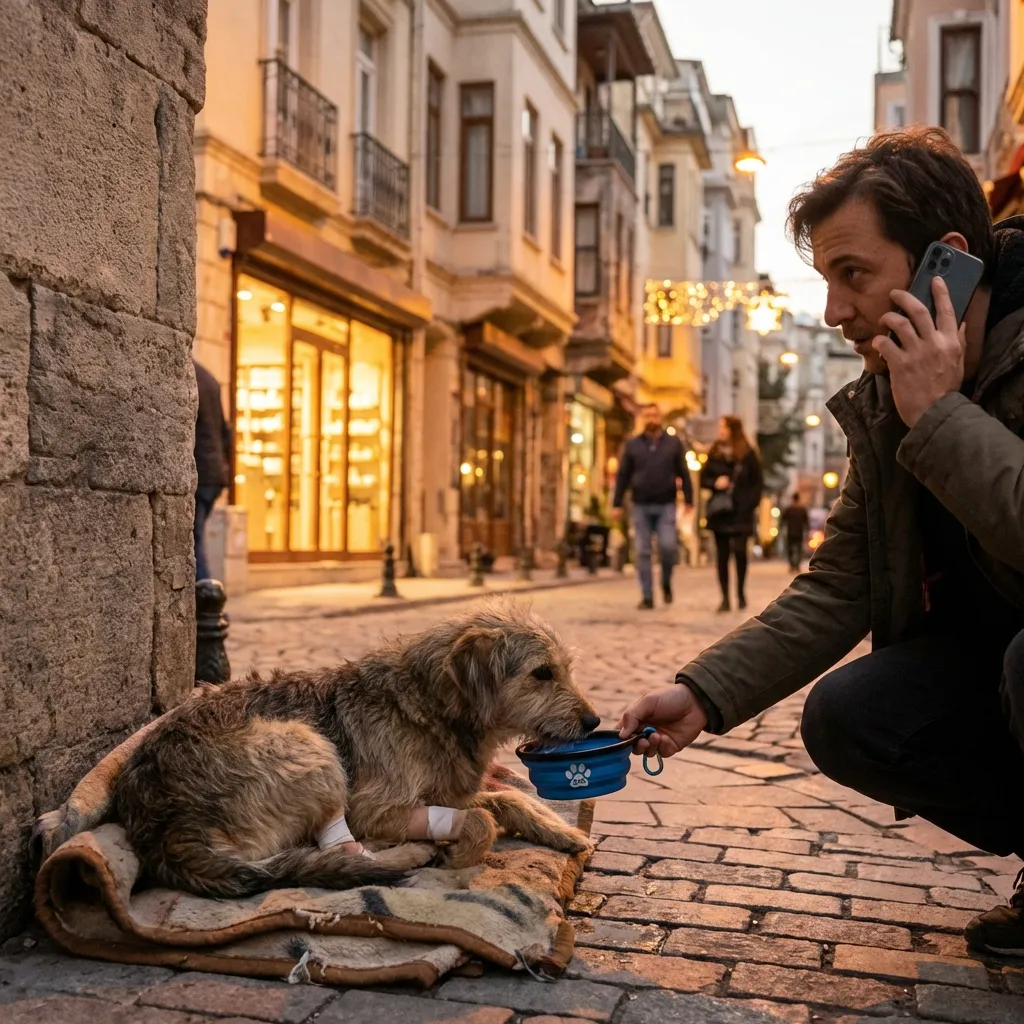
For dogs: Approach slowly and at an angle, avoiding direct eye contact. Hold out the back of your hand and let the dog sniff it. If possible, make a temporary leash with a scarf, belt or rope. You can reduce the risk of a bite by wrapping a glove or a soft piece of fabric around the muzzle.
For cats: Injured cats usually try to hide. You can calm a cat and carry it by wrapping it in a blanket or towel. If you don't have a carrier, use a sturdy cardboard box and loosely cover the top.
Transport Rules
- If you suspect a fracture, move the animal as little as possible
- Carry it on a hard, flat surface (a board, cardboard)
- If there is bleeding, apply pressure with a clean cloth
- Keep the animal warm; body temperature drops quickly in shock
Who Should You Contact?
When you find an injured stray animal, there are many institutions you can turn to:
- The municipal Veterinary Directorate (Belediye Veteriner Müdürlüğü): Every municipality is required to provide veterinary services for stray animals. You can call your city's veterinary directorate to hand the animal over or ask them to send a team
- ALO 153 (the municipal hotline, Beyaz Masa): The quickest way to reach municipal services
- ALO 174 (the Ministry of Agriculture and Forestry hotline): The environment and animal rights reporting line
- Animal protection associations: Animal protection associations in your area usually have volunteer vet networks
- Private vet clinics: In emergencies, the nearest clinic open 24/7 can be a lifesaver
Basic First Aid
There are some basic first aid steps you can take until you reach a vet:
- Bleeding: Apply pressure to the wound with a clean cloth or gauze. Do not use a tourniquet
- Shock: Keep the animal warm, provide a calm setting, and do not give water or food
- Fractures: Do not try to set the broken area; move the animal as little as possible while transporting it
- Poisoning: Do not try to induce vomiting; if possible, find out what the toxic substance was
Your Legal Rights
Under Animal Protection Law No. 5199, reporting an injured animal to the authorities when you see one is a civic duty. Municipalities are required to provide treatment for stray animals. Treatment costs are covered by the municipal budget. If a municipality neglects this duty, you can file a complaint by calling ALO 174.
Helping an injured stray animal is a beautiful sign of the responsibility we share as a society toward each other and toward other living beings. A little help from you can save a life.